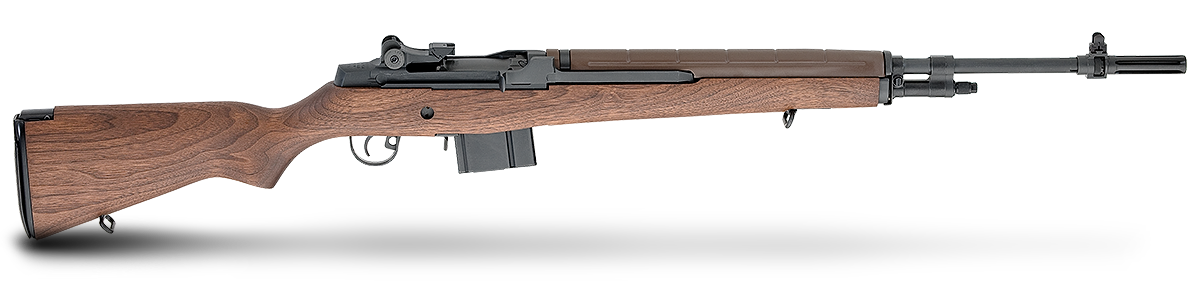
The renowned M14 service rifle has a complex history: it was the U.S. military’s shortest-lived service rifle yet one of the longest in service. While its time as a standard-issue rifle for G.I.s was brief, its power and performance have ensured its continued use as a sniper and Designated Marksman Rifle (DMR), cementing its legacy.
In fact, while the M14 initially served as the primary service rifle in the dense jungles of Vietnam, it was also there that it earned its place among the pantheon of American sniper rifles.
Vietnam War Backdrop
In Vietnam, the U.S. military quickly recognized the need for accurate long-range fire to engage distant targets and conduct counter-sniper operations. Early in the Vietnam conflict, marksmen relied on aging M1C and D Garands from World War II. Some fortunate snipers received accurized M14 rifles used in marksmanship competitions.
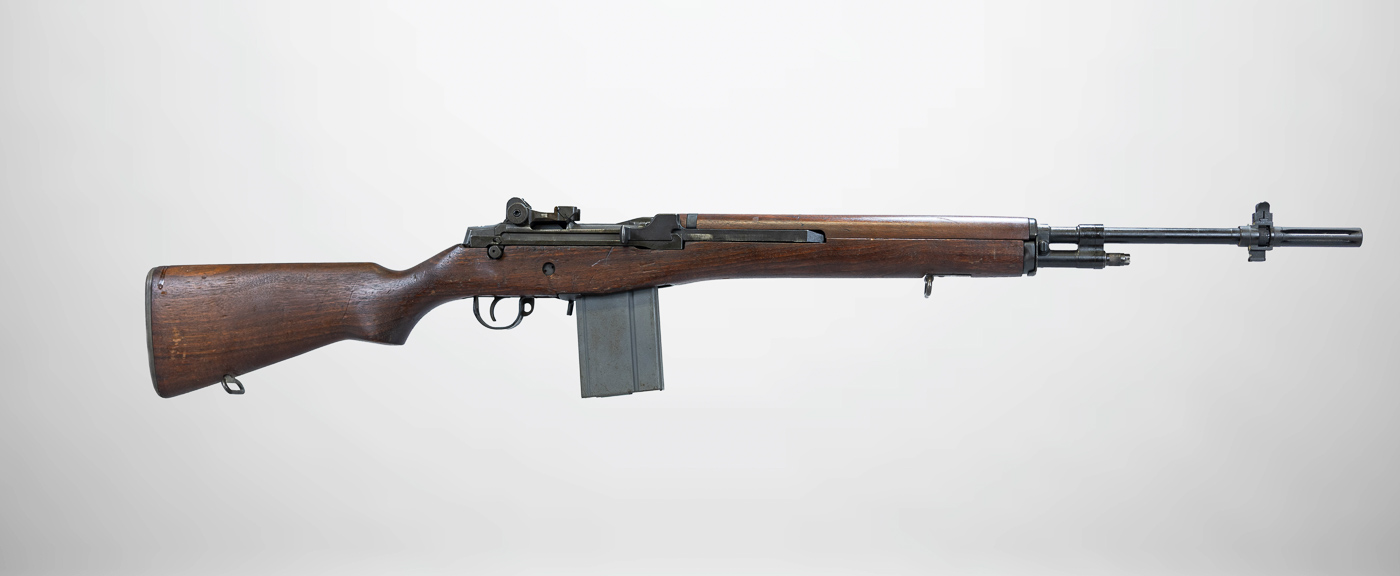
The Army was slow to develop sniper doctrine, especially compared to the Marine Corps. This slow progress finally sped up on February 23, 1967, when the Headquarters, U.S. Army, Vietnam, issued a “Letter of Instruction” to the Army Concept Team in Vietnam (ACTIV) to “determine the organizational, doctrinal, and material requirements for sniper operations by U.S. Army units in the Republic of Vietnam.” All ahead full.
Early Development
Army leadership now recognized the strategic value and need for snipers. The Army adopted a systematic approach to selecting rifles and establishing training standards. After issuing instructions to ACTIV, an information-gathering campaign began.
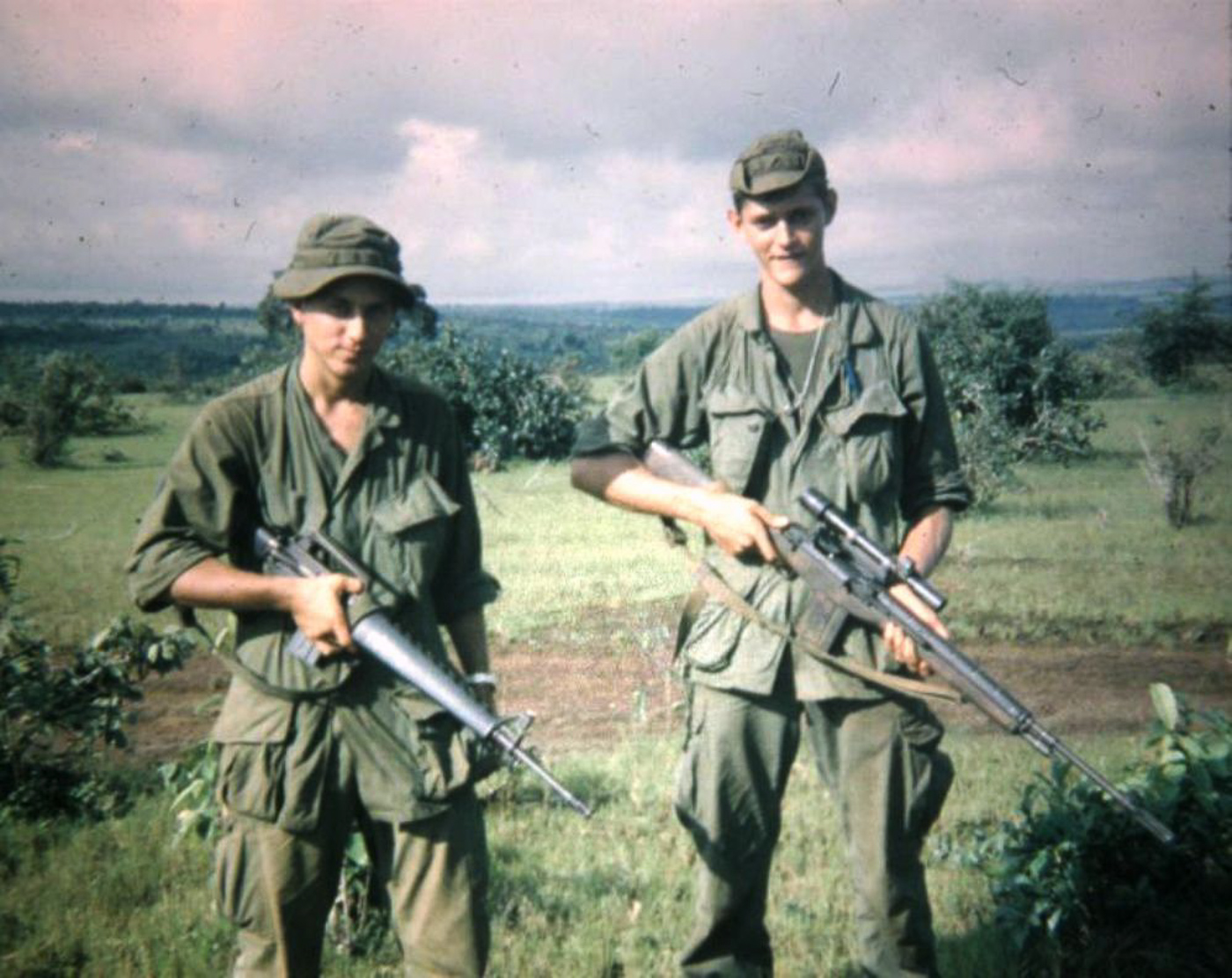
ACTIV worked diligently to collect information, evidence, and firsthand accounts from field commanders who used snipers, even when those commanders had limited sniping resources. This also included communication with the Army Marksmanship Unit at Fort Benning, Georgia (USAMU). While not snipers learned in the art of stalking, these shooters were the Army’s top marksmen and experts on rifles and riflery. The USAMU provided advice on rifles, precision shooting techniques, and other essential equipment.

Live The Armory Life. The latest content straight to your inbox plus an automatic entry to each of our monthly gun giveaways!
That spring, Winchester Model 70 and M14 rifles arrived. Over the next six months, ACTIV observed and gathered data as they worked to develop a clear understanding of sniper operations in Vietnam. In 1968 — one year later — ACTIV’s findings were released in the classified document titled “Sniper Operations and Equipment.” In it, ACTIV recommended:
- Divisions and separate command brigades were to be authorized sniper equipment in addition to TOE weapons.
- Organization for sniper operations is tailored by divisions and brigades in accordance with their requirements.
(3) The accurized M14 was to be designated as the standard sniper rifle in Vietnam.
(4) A standard sniper telescope was to be designated.
(5) A sniper-training program was to be provided for units in Vietnam.
(6) Expand doctrine for employment of snipers to be developed and included in appropriate field manuals.
ACTIV’s listings were further expanded in an official document titled “Equipment for the American Sniper.” In it, it stated, “It is safe to say that the American sniper could be regarded as the greatest all-around rifleman the world has ever known, and his equipment should include the best aids to his dangerous calling that the inventive genius of the United States can produce.” For American snipers to succeed, they relied on the United States’ military-industrial strength.
Rifle Testing
The Army, which aimed to develop sniper tactics, training, and systems in-country (rather than in the U.S.), needed a ready-made rifle option. This had to be either existing military hardware or civilian-built. The first four rifles reviewed included an accurized M14 with a 2.5X M84 riflescope, the M14 National Match Rifle (used by the USAMTU) equipped with a Redfield scope, an M16 with a 3X Realist sight, and finally, the Winchester Model 70 with a 3X Weaver scope.
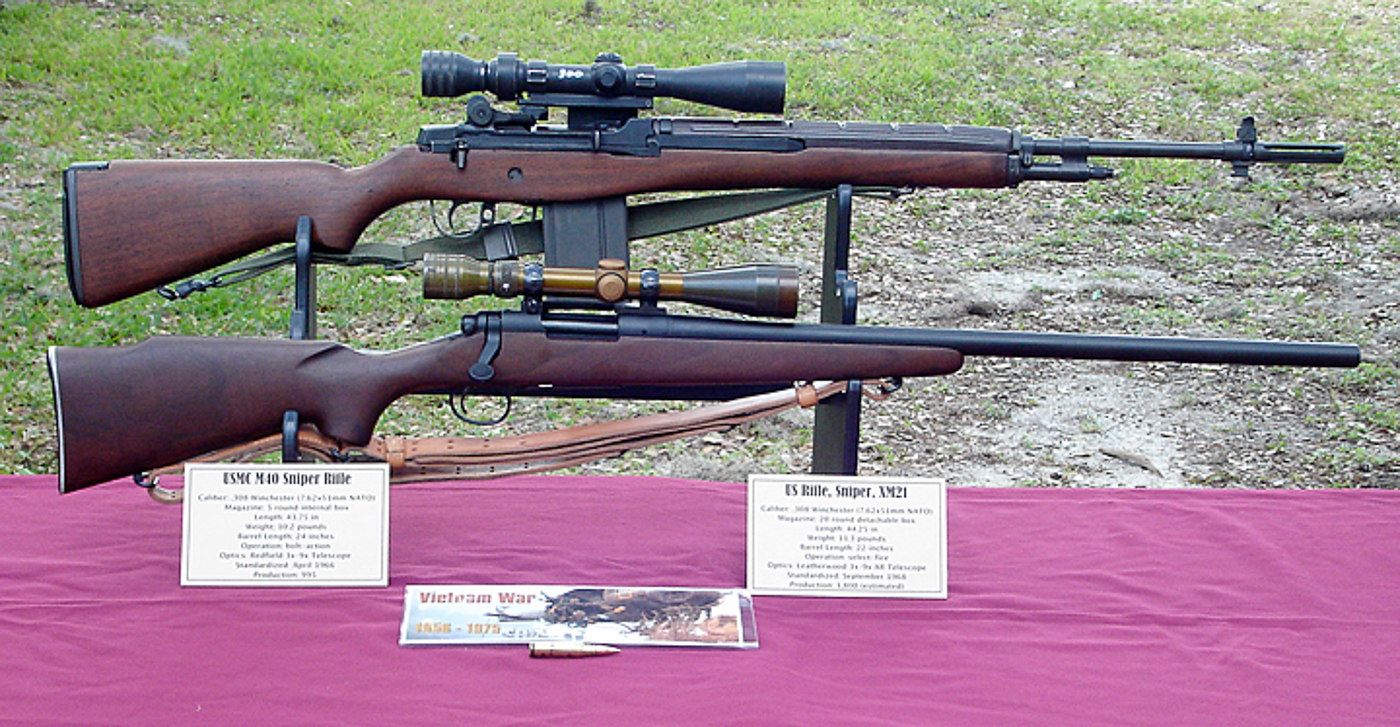
For similar reasons to the Marine Corps, the Model 70 was quickly relegated because of its .30-06 Springfield chambering. Additionally, without access to competition-level ammunition for the M16, the platform faltered, though the idea of an accurized M16 platform persisted for later development.
As for the two M14 variants, there was not much that distinguished them. The only difference was the mounting systems for their respective optics. Selected M14 rifles received match-grade barrels, unitized gas systems, trimmed handguards, and reamed flash suppressors. The rifle’s triggers were adjusted to slightly over 4.5 pounds, National Match sights were fitted, and actions were glass bedded. The Army also had access to the renowned Lake City M118 7.62x51mm match ammunition used by the Marine Corps.
During testing, end users were 75%-100% confident in the M14 system, with the optic option receiving high praise. In ACTIV’s final report, examiners stated, “The major reason for the preference of the M14 was greater range and accuracy. The limited number of commanders who had experience with the M14 w/ ART preferred it to the M14 w/ M84 because of the power and the range-finding feature of the telescope.” ACTIV concluded that the Accurized M14 should “be designated as the standard sniper rifle for Vietnam.” (This, of course, was not limited to the Vietnam conflict, but to global units).
In February of 1969, the M14 was adopted as the XM-21, and Rock Island Arsenal quickly went to work. Throughout the war, Rock Island built more than 1,200 rifles. In 1972, the XM21 was officially adopted as the Rifle, 7.62mm Sniper 21, or simply, the M21.
Legacy
The M21 received both praise and criticism. Its service life extended well beyond the Fall of Saigon. However, the original rifle was never designed to be a sniper rifle. The main flaw was the nature of the system itself. Its accuracy was adequate for general infantry use, but to get the most out of the platform, it required the services of actual armorers. This made field servicing difficult. That said, the M21 did have notable successes.
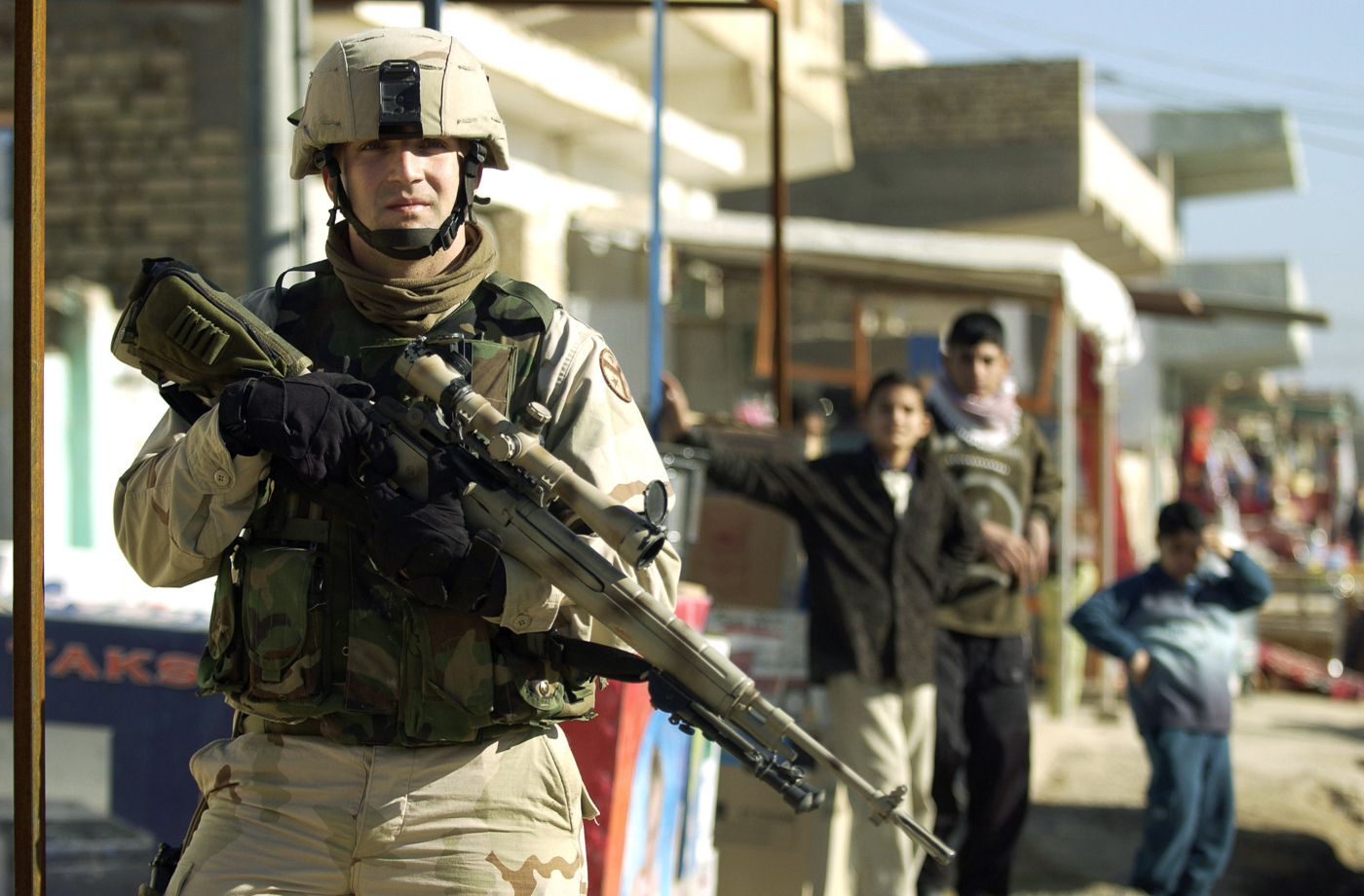
The legacy of the M21 is murky. Like previous conflicts, after the withdrawal from Vietnam, the Army’s sniper program went dormant. However, in the late 1970s, renewed interest emerged in establishing a dedicated sniper school amid Cold War tensions.
The M21 competed with the M40A1 and other commercially available rifles, eventually maintaining its status as the Army’s primary sniper rifle. While the rifle performed well, in 1988, after a longer-than-expected service life, it was replaced by the M24 bolt-action rifle, similar to the Marines’ M40A1.
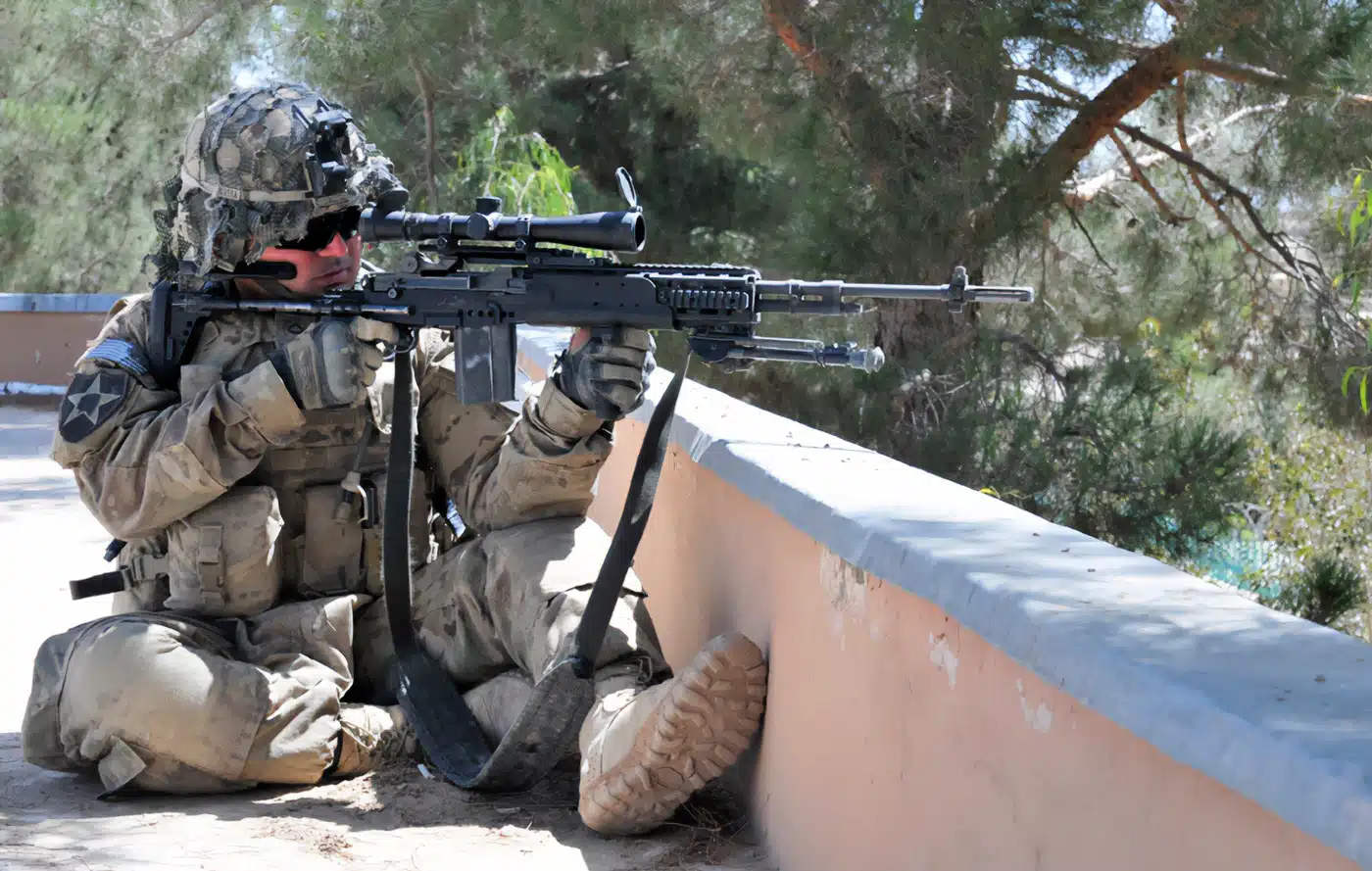
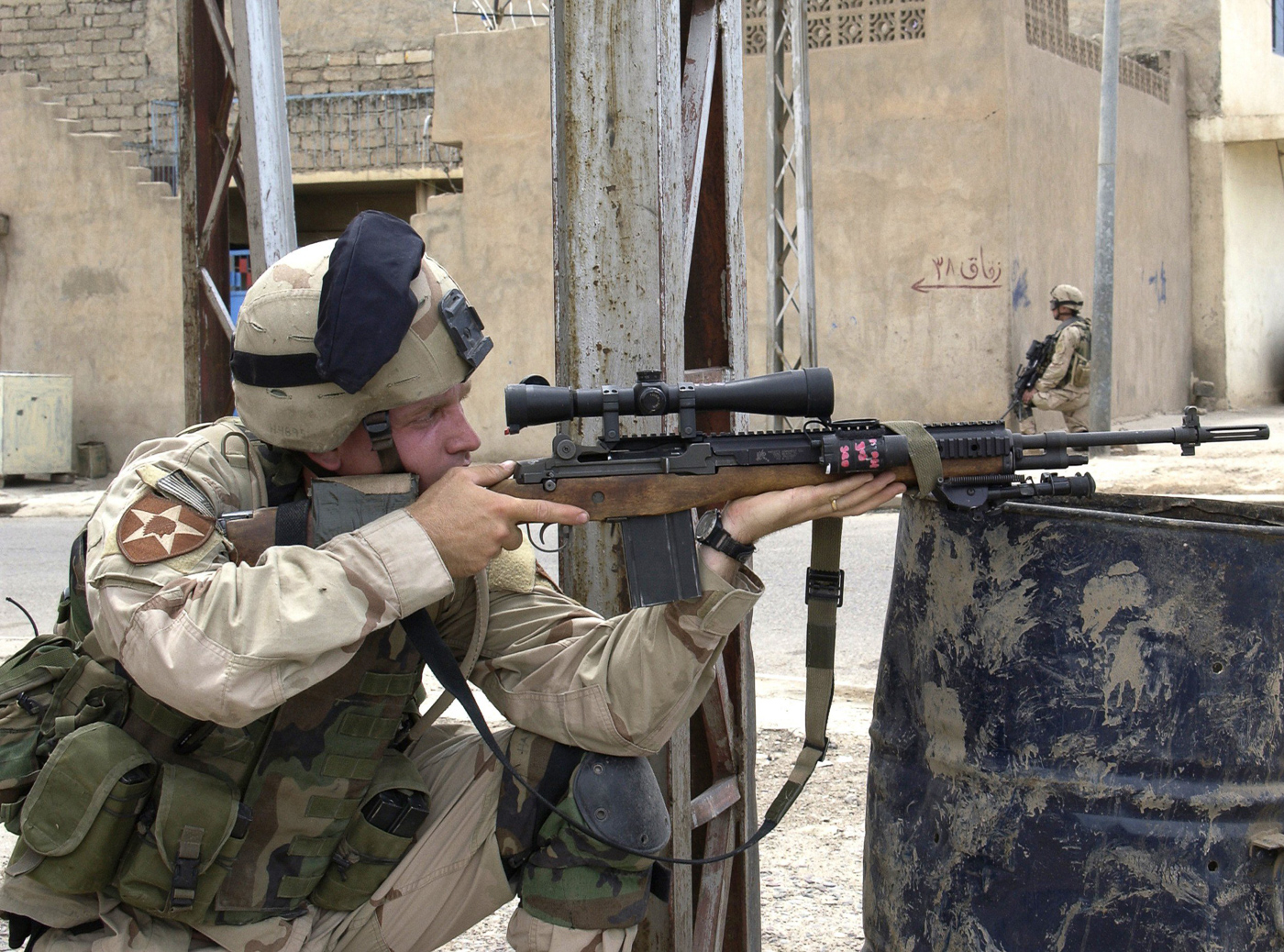
Interestingly, the M21 is a rifle that refuses to go quietly. As the 21st-century conflicts in Afghanistan and Iraq expanded in scope and complexity, the U.S. Army needed a force multiplier weapon. The M21 was once again pressed into combat by both snipers and newly formed Designated Marksman Units to provide precision fire support for small infantry units in the Global War on Terror (GWOT). A notable part of the rifle’s history was the development and deployment of the M14 EBR (Enhanced Battle Rifle).
The M14 EBR featured a chassis made from lightweight aircraft aluminum (developed by Sage International). This chassis was designed to support night vision devices mounted in front of the day optic, along with various combat accessories never before used in modern warfare. The system was designed to be ready for soldiers right out of the box. Pentagon officials viewed the M14 EBR-RI as an interim solution and eventually replaced it with the M110.
Conclusion
The M21 is a crucial rifle to study when exploring the history of American snipers. The M21 was developed during the height of sniper evolution. While earlier conflicts employed snipers in different roles, it was in Vietnam’s jungles that military strategists truly recognized their battlefield importance.
The M14, while a short-lived battle rifle, became one of history’s most influential weapons, helping shape the American sniper community. First with the Cold War and through the Global War on Terror, the M14 performance has cemented the rifle as one of the most unique and significant sniper rifles in America’s arsenal. Today’s version of the rifle continues in service as the M21A5 Crazy Horse where is has served around the globe including in combat operations in Iraq and Afghanistan.
Editor’s Note: Please be sure to check out The Armory Life Forum, where you can comment about our daily articles, as well as just talk guns and gear. Click the “Go To Forum Thread” link below to jump in!
Join the Discussion
Featured in this article
Read the full article here