Guidance needed for doctors treating DOD, VA patients exposed to jet fuel in Hawaii water, report says


Because no clinical guidance exists for medical providers in their long-term treatment of people exposed to jet fuel, the Defense Health Agency and the Department of Veterans Affairs should develop guidance, along with residents of Hawaii, for those exposed to fuel-contaminated water in the state in 2021, a new report recommends.
There’s not enough data to determine the risk of long-term health effects caused by exposure to that kerosene-based aviation fuel, known as JP-5, according to the report, which was based on research conducted by the National Academies of Sciences, Engineering, and Medicine.
The authors did find “limited, suggestive evidence linking jet fuel exposure to short-term respiratory, gastrointestinal, skin and mental health symptoms,” which many military families experienced early on after the fuel leak.
The researchers cited the dearth of information and data about the detection, treatment and long-term effects of exposure to jet fuel in the 282-page report, titled “Clinical Follow-up and Care for Those Impacted by the JP-5 Releases at Red Hill.”
The research was sponsored by the departments of Defense and Veterans Affairs.
In a Thursday webinar, researchers said the limitation of data needs to be addressed so that long-term health effects can be better understood. They recommended various long-term research efforts.
Meanwhile, medical providers caring for people who were potentially exposed to the contaminated water should document exposure history, carefully evaluate and document symptoms and ensure continuity of primary care, the researchers recommended.
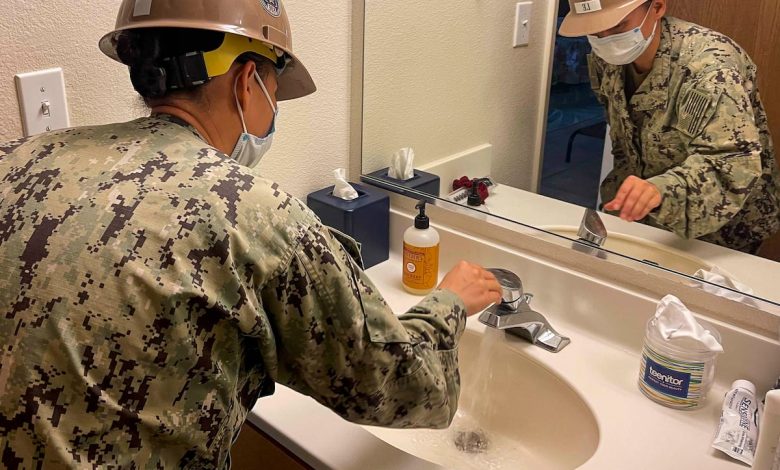
About 93,000 people were affected by the Navy’s two accidental releases of JP-5 in 2021. The fuel releases contaminated the drinking water supply for Joint Base Pearl Harbor-Hickam and the Aliamanu Military Reservation.
Immediately after the contamination, Navy officials told families it was OK to drink and bathe in the water. Some families experienced severe rashes, diarrhea and other gastrointestinal problems, as well as respiratory problems, mental health symptoms and other issues.
Military officials later gave families the choice of moving to hotels while the fuel was being flushed from the water distribution system and paid their expenses.
RELATED
More than four years later, families continue to be concerned about their long-term health, including their children. Many babies were bathed in the contaminated water. Some people have had persistent, continuing symptoms. About 2,000 military families have filed lawsuits against the government alleging negligence and harm to their health.
There are no diagnostic or screening tests to determine past exposure, and there are no specific laboratory tests for detecting JP-5 in blood or urine. The report recommended research to develop and validate biological markers of petroleum associated with exposure to jet fuel, supported by the Centers for Disease Control and Prevention, National Institutes of Health, DOD and VA.
There are no known medical procedures that can detox or neutralize the effects of JP-5, the researchers stated.
In addition to their extensive review of available scientific evidence, the researchers visited Red Hill and the Honolulu Board of Water Supply and held 15 meetings with those affected in the community, including service members, military families, civilians and other Oahu residents. They also held additional in-person and virtual listening sessions.
A central theme that emerged from these community interactions was the breakdown of trust between residents and the medical system, researchers found. Families reported repeatedly trying to seek help for themselves and their children, while their conditions worsened.
Those individuals who were affected by the fuel leaks have been encouraged to sign up for registries, including the University of Hawaii Red Hill Independent Health Registry and, for the DOD population, the Red Hill Defense Occupational and Environmental Health Readiness System (DOEHRS) Registry.
But the researchers recommended that DOD link their Red Hill registry with patients’ electronic health records and claims data. Many in the mobile military community who were affected have relocated, and their electronic health record follows them.
Researchers recommended that DOD maintain this registry and expand it to include all individuals who lived or worked at Joint Base Pearl Harbor-Hickam or Aliamanu from May 6, 2021 to March 18, 2022.
Based on their review, the Academies researchers recommended other actions that could make a positive impact on the lives of people who are affected by these incidents in the future, such as developing a standardized environmental sampling and chemical analysis methods to test for petroleum contamination in drinking water.
“For military families, the event was experienced as a breach of trust, while for many civilians and Native Hawaiians, it confirmed enduring concerns about military activities and their impact on land and water,” the report stated.
“The contamination of drinking water at Red Hill stands as a defining environmental health event for Hawaii and for the nation,” the report continued. “It reveals how deeply the safety of water, the health of communities and the integrity of institutions are intertwined.
“For thousands of families the crisis raises serious questions about drinking water safety and breached trust with institutions.”
Karen has covered military families, quality of life and consumer issues for Military Times for more than 30 years, and is co-author of a chapter on media coverage of military families in the book “A Battle Plan for Supporting Military Families.” She previously worked for newspapers in Guam, Norfolk, Jacksonville, Fla., and Athens, Ga.
Read the full article here