
KYIV, Ukraine — The price of U.S. security guarantees to end Russia’s full-scale invasion of Ukraine became explicit this week: Kyiv must give up all of Donbas — about 10% of its territory, or about 15% of its prewar GDP.
The United States has asked Ukraine to withdraw from all of the eastern region — including areas it has held during more than 14 years of Russian attacks — before it will finalize the long-term protections it has been discussing with Kyiv for months, Ukrainian President Volodymyr Zelenskyy said, describing the negotiation in comments to Reuters.
The demand followed bilateral talks in Florida with U.S. special envoy Steve Witkoff and senior adviser Jared Kushner last weekend that Zelenskyy said produced no real progress, a sharper assessment than his earlier claim that the guarantees were “100% ready.”
Just three weeks earlier, Zelenskyy tried to close the door on the central trade-off in the talks. Ukraine would “never leave Donbas and the 200,000 Ukrainians who live there,” he told Corriere della Sera.
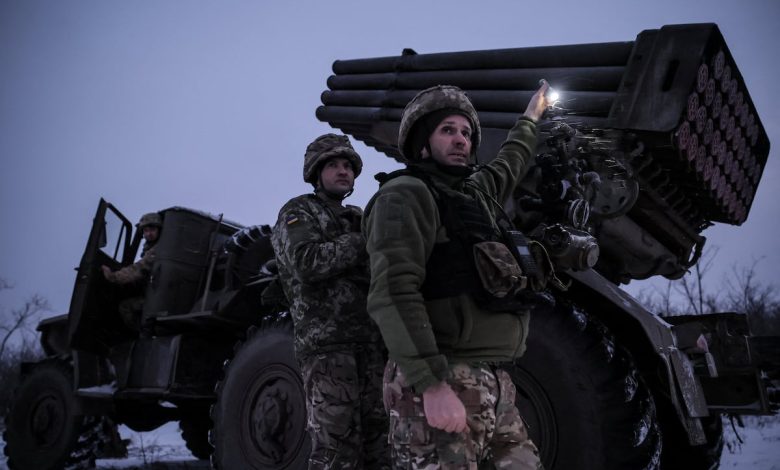
But the battlefield did not slow down to match the diplomacy. Ukraine seized more ground in a February counteroffensive than at any point since 2023, according to the Institute for the Study of War.
Russia answered this week with its spring offensive — nearly 1,000 strikes in 24 hours, the largest attack of the war. Ukraine hit back the next day with about 400 drones, crippling at least 40% of Russia’s oil export capacity, according to Reuters.
Russian officials said this week the talks had been paused, though it was not clear when — or whether — they would resume.
“What Ukraine is being asked to do is politically and morally unacceptable,” retired Lt. Gen. Ben Hodges, the former commander of U.S. Army Europe, told Military Times.
In his view, the Donbas demand isn’t a bargaining chip — it is the point of the deal, and a test of whether Washington is willing to trade Ukrainian territory for a paper promise.
“You’re asking a country that’s been invaded to surrender its people and its land, and you’re calling that peace,” Hodges said.
As experts see it, the deal isn’t a path to peace so much as a demand Ukraine can’t accept: trading away Donbas for an undefined guarantee from a guarantor whose credibility is already fraying, as the Iran war drains the weapons Kyiv needs and boosts the Russian war machine.
And if the message is that even a country that gave up its nuclear arsenal can be told to cede land for a “maybe,” the result won’t be peace, they argue, but more wars and more states concluding they need the bomb to survive.
Retired U.S. Ambassador Ian Kelly, who served as ambassador to Georgia when Russia occupied 20% of the country, said the pattern was not new.
“We gave them the Javelin but then said, ‘By the way, don’t use them,’” Kelly told Military Times.
Kelly said the outline is familiar: a concession Kyiv cannot make, paired with a promise that has not been spelled out — and offered by a sponsor whose follow-through is already doubted.
While any ceasefire signed under those conditions would be temporary, Kelly said, the precedent it sets would be permanent: it tells Moscow what kinds of demands work, and it tells U.S. partners what American protection is actually worth.
The uncertanties behind it come fast: what, exactly, Washington is offering; what enforcing it would actually require without the U.S.; and what happens if the guarantee fails its first credibility test.
Either way, the long shadow is the same. Deterrence doesn’t disappear — it migrates.
The guarantee mirage
The security guarantee at the center of the deal carries a basic problem: the people involved don’t appear to agree on what it means or whether it would hold up when tested.
In February, Zelenskyy tried to make one of Ukraine’s few real political concessions count: he said Kyiv would drop its bid to join NATO, a goal that had anchored Ukraine’s post-2019 foreign policy and one Moscow has long used to justify its war.
Washington, Zelenskyy said, offered what it described as “Article 5-like” security guarantees in return.
Hodges said the wording was the tell. Article 5 is a treaty commitment with a known trigger and an alliance behind it.
“Article 5-like” is neither. “That’s not a security guarantee,” he said. “It’s a phrase.”
He called it an “absolutely empty promise.” If the administration won’t even enforce existing sanctions — he pointed to India importing more Russian oil than before the war — “the administration’s not serious,” Hodges said.
“You can’t design security guarantees on the basis of ‘maybe,’” Hodges added.
He said he had zero confidence the current administration would treat a Russian drone attack on Ukraine the way it would treat one on New York or Washington.
“Does it have to be 50 drones or is it one drone?” he said. “I don’t have any confidence that they would really do that.”
But the deeper problem, he said, is that both sides know it.
“This is where we get into the Jedi mind tricks,” Hodges said. “I find it hard to believe that the Ukrainians trust … the Americans. So, they’re also positing that simply as a negotiation tactic” to by time, he argued, for Europeans “to rediscover their strategic backbone and do what needs to be done to provide those capabilities.”
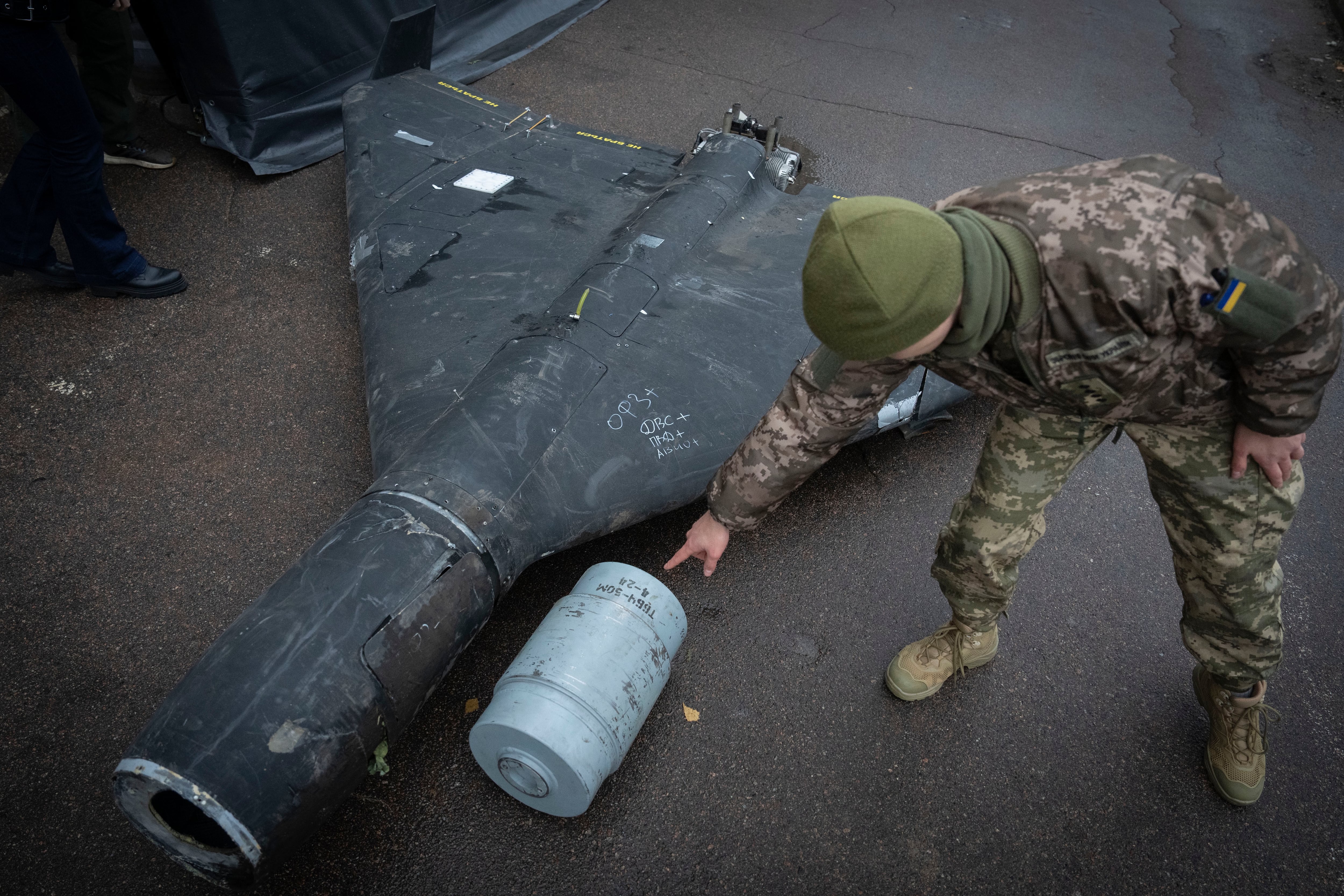
Most NATO allies still fall short of the alliance’s defense spending targets. Trump has repeatedly threatened to pull the U.S. out if they do not pay up, leaving Ukraine reliant on a security umbrella its own guarantor is threatening to fold.
Hodges said the administration’s approach was failing not because the negotiations were insincere, but because Washington had refused to back Ukraine on the most fundamental issues from the start.
“They never cared about the origin of the war,” Hodges said. “They’ve never been willing to say that Russia was the aggressor. They’ve never said, ‘Russia, you’ve got to get out.’”
A deal no one believes in
When looking at the track record — the 1994 Budapest Memorandum, which failed to prevent Russia’s invasion after Ukraine gave up its nuclear arsenal, and the Minsk ceasefire agreements that repeatedly collapsed — the new guarantee does not get any easier to take at face value, experts and insiders said.
Ed Arnold, a senior research fellow for European security at the Royal United Services Institute and a former British Army infantry officer, said the guarantee breaks down in three places: Washington is unlikely to commit to it, Kyiv is unsure it would hold and the Kremlin would sign only to keep fighting on better terms.
“Is the U.S. going to provide Ukraine something like mutual security assistance? I don’t think so,” Arnold told Military Times. “And even if they did, do the Ukrainians believe in it? And pretty critically, does Putin believe in it?”
Arnold pointed to the Iran nuclear deal and the Paris climate accords, both presidential directives that were reversed by successor administrations.
“[Those directives] are not legally binding,” he said. “The U.S. has fairly consistently let Ukraine down.”
Even if the guarantees were defined, the rules of enforcement make it practically impossible to sustain without the U.S., whose military spending exceeds that of every European NATO member combined.
“Europe simply does not have the capacity to provide the same level,” Arnold said. “Yet at the same time, they can’t trust the United States, given America’s most recent actions — let alone history.”
And what European governments do send, they lose permanently from their own defense posture.
Arnold calculated that any peacekeeping force of 15,000 to 25,000 soldiers requires triple that in a rotation committed indefinitely.
“Whatever you’re going to put into Ukraine, you’re permanently taking it away from what is available to you,” he said.
The diplomat said the deeper failure was not material but political. The failure of European leaders to convince their own populations that Russian aggression was a threat to them, not just to Ukraine.
“Europe has completely failed at deterrence,” he told Military Times.
Arnold traced the political logic to its root.
“Politically, you don’t win votes by spending more money on defense and less on welfare,” he said.
The result is a continent that has, in many ways, lost strategic control of its own defensives.
“We have handed escalation control to Russia,” he said. “They continuously escalate. And we keep absorbing it.”
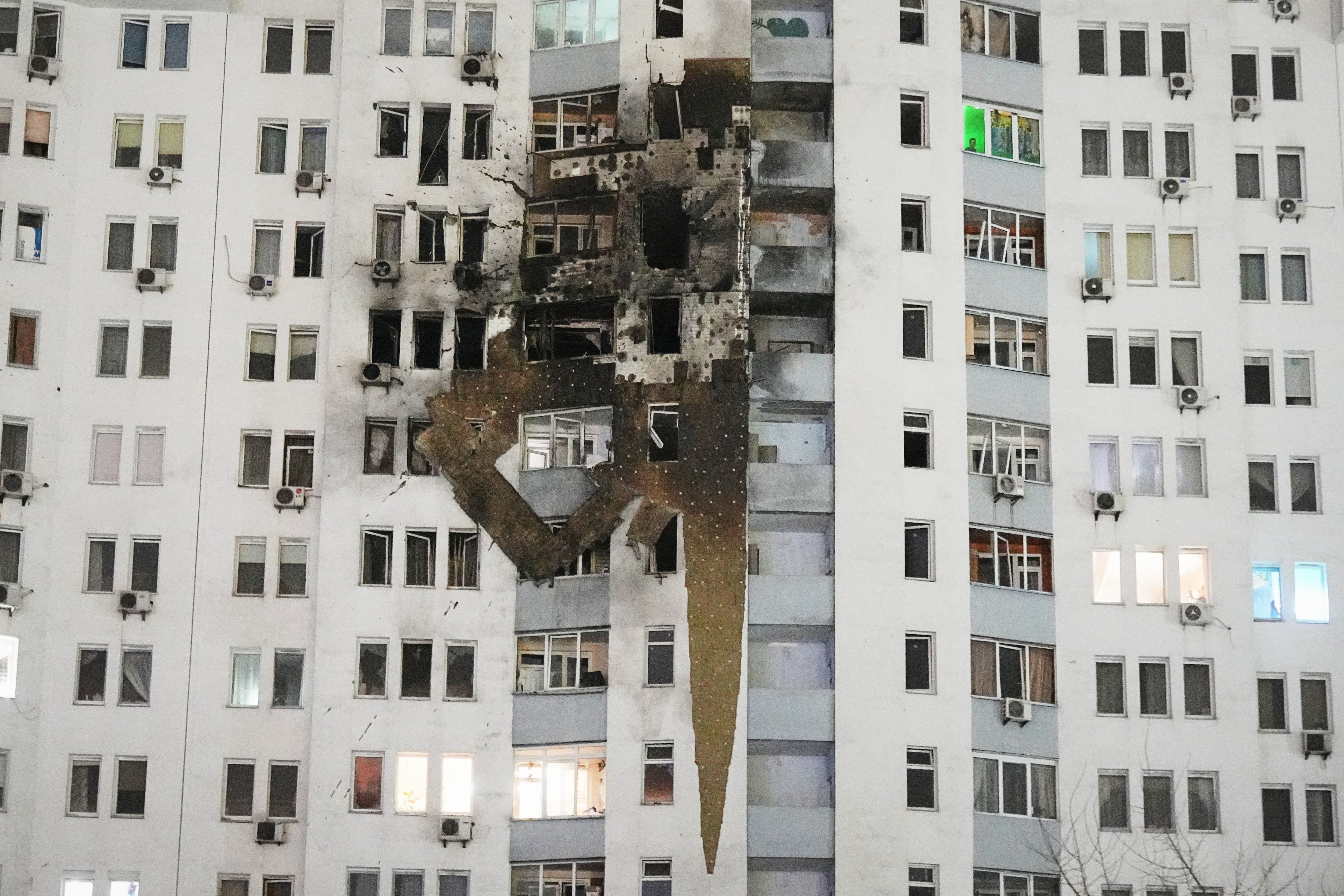
For Zelenskyy, a deal that locks in a Ukrainian withdrawal from Donbas would force Kyiv to formalize a loss it has spent years saying it will not accept. It would also put Zelenskyy’s own pledge to “never leave Donbas” on the line, along with the roughly 200,000 Ukrainians he has said are still there.
“It would be toxic to sign up to something just to say that Russia gets off the hook for everything it’s done in not just the last four years, actually the last 12,” Arnold said.
That is why the deal, as described, does not reduce the risk of another war, Arnold added. It pushes it down the road.
“Russians certainly don’t want peace,” he said. “They do want their economy to improve, probably to move against Ukraine again in the future.”
Putin “is not in the mood to negotiate and is kind of making a fool of Trump,” he added.
The price and the precedent
Kelly said Washington was not eliminating the risk of escalation with Russia, but instead moving that risk down the chain, from the U.S. onto Ukraine and onto European allies that have less capacity to absorb it. In doing so, the risk of where increases everywhere.
“If we don’t impose the necessary costs on that, it’s obviously a lesson for other countries in the world,” Kelly told Military Times.
Kelly said that is the logic of what economists call a “moral hazard.” One party avoids the cost of a dangerous outcome by shifting it onto someone else.
“That’s what we’re doing here. We see a risk of a nuclear engagement with Russia, so we transfer that risk to the only country that’s paying the price.”
That shift, he argued, forces U.S. allies to rethink the core premise that has underpinned European security since World War II: that Washington would backstop them if Russia attacked.
“Europe has to basically operate on the assumption that they can’t count on the United States when it comes to Ukraine,” Kelly said.
For decades, many U.S. partners shaped their defense policies around that backstop, scaling down militaries, forgoing their own nuclear options and betting that American power would be there in a crisis. If that guarantee is no longer assumed, Kelly said, countries start recalculating what they need to deter Russia on their own.
“Their ultimate deterrent was always the U.S. nuclear umbrella,” he said. Without it, the logic that kept dozens of nations from pursuing their own weapons programs collapses.
“That could mean that these states are going to want to have their own nuclear deterrent.”
The nuclear shadow
France has already started talking in those terms. In early March, President Emmanuel Macron used a speech at France’s nuclear submarine base in Brittany — home to the country’s nuclear submarine fleet — to argue Europe needs to think about deterrence in a more self-reliant way, and to signal Paris is prepared to play a bigger role.
“The global framework for nuclear arms control now resembles a field of ruins,” Macron said.
He ordered what could be the first expansion of France’s nuclear warheads since the Cold War and announced a doctrine of “forward deterrence” extended to European allies for the first time. This included the potential dispersal of strategic air forces across the continent, in what Le Monde called “a major step toward Europe.” Macron declined to disclose the size of the arsenal.
On the fourth anniversary of Russia’s invasion, Ukraine’s Defense Minister Mykhailo Fedorov laid out the alternative conditions that could actually help ensure peace.
“The sky is secured, the Russian army loses its offensive potential and Russia’s economy can no longer sustain the burden of war,” he said.
But not one of those conditions has been met, and recent events seem to be taking Ukraine further from its goals.
Macron, standing among the submarines, answered a different question — the one the entire negotiation had been avoiding.
“Can we imagine the survival of our closest partners being threatened,” he said, “without that affecting our vital interests?”
“To be free, one needs to be feared — and to be feared, one must be powerful.”
Read the full article here