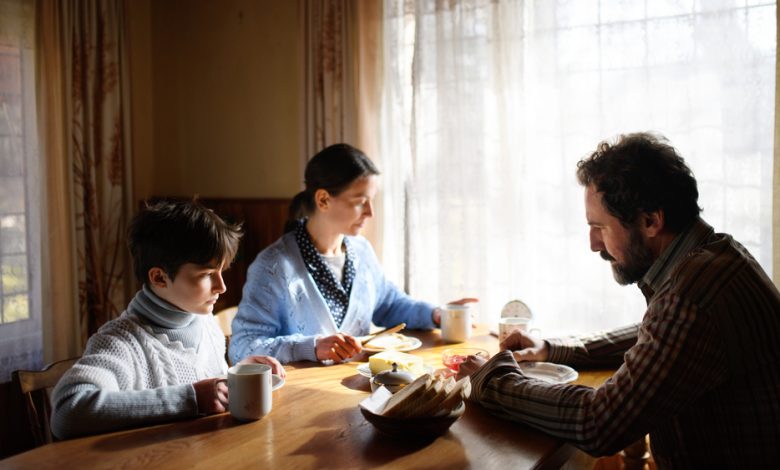

The custom of shared family meals is common across most cultures. In all likelihood, our ancestors sat down together for shared meals as families, clans or tribes, before they could be called anatomically modern humans. Shared family meals are a universal and ancient tradition and one that has many benefits.
It seems like elements of society have declared war on heuristic traditions, and in the past thirty-five years, family dinners have declined by 30%. Less than a quarter of families now share seven or more family meals per week. (Anderson & Trumbull, 2021)

If you don’t eat together as a family, I’ll give you some reasons why you should start, and if you do sit down for family meals, I’ll give you some reason why you should continue the practice.
Family Dinners Are Good for Your Health
Families who have positive experiences with shared meals log less screen time, are more active, and eat better than families that don’t
- Healthier Diet – Family dinners result in the family eating more fruits and vegetables and dairy products and less fast food.(Larson, Daines, M.P.H, Bevan, M.S., R.D, Gupta, Ph.D., & Savoie Roskos, 2024) (Curran, 2026)
- Healthier Weight – Kids who participate in family dinners have a much lower incidence of childhood obesity.(Anderson & Trumbull, 2021) Kids are less likely to be overweight 10 years later. (Curran, 2026)
- Improves Cardiovascular Health in Teens – It’s not surprising that less screen time and lower weight result in better cardiovascular health. (Anderson & Trumbull, 2021)
- Healthier Eating Patterns in Young Adults – Eating dinners at home introduces kids to tasty, healthy foods, boosting nutrients and improving chances that they will pick similar foods away from home.(Muth, MD, MPH, FDN, FAAP, FACSM, 2024) Adolescent females in families that ate 5 or more meals together had a much lower incidence of eating disorders. (Anderson & Trumbull, 2021)
Improved Mental Health
Many studies show links between shared family meals and improved mental health. On a biological level, social interaction triggers the release of oxytocin and endorphins and eating tasty food triggers the release of dopamine, thus shared meals boost mood. (Nunez, 2026)
- Improved Self Esteem – Families that share family dinners enjoy improved body image in adolescents. (Anderson & Trumbull, 2021)
- Improved Sense of Resilience – Shared family meals may also help protect adolescents from the harmful effects of cyberbullying, which affects one in five kids. (Curran, 2026)
- Lower Risk of Depression – Teens who have family dinners more often are less likely to experience depression and teens who attend seven or more family meals per week are less likely to report a suicide attempt. (Muth, MD, MPH, FDN, FAAP, FACSM, 2024) Shared family dinners also reduce loneliness. Your body reads chronic isolation as a threat and shared meals help counteract the body’s response. (Nunez, 2026)
- Lower Risk of Eating Disorders – Studies indicate that kids in families that participate in regular family dinners are 35% less likely to engage in disordered eating. (Muth, MD, MPH, FDN, FAAP, FACSM, 2024) (Anderson & Trumbull, 2021)
- Lowers Incidence of Aggression – Children in families with positive family meal experiences at 6 years of age were less likely to demonstrate physical aggression and aggressive behaviors 4 years later. (Anderson & Trumbull, 2021)
- Moderate Risky Behaviors – Teens who have more frequent family dinners are less likely to engage in sexual activity and have a lower incidence of teen pregnancy. (Anderson & Trumbull, 2021)
- Lower Risk of Substance Abuse – Kids who have frequent family dinners have decreased access to prescription drugs, decreased likelihood that friends use drugs, and are less likely to use drugs. (Muth, MD, MPH, FDN, FAAP, FACSM, 2024)(Anderson & Trumbull, 2021)
Improves Academic Performance in Kids
Sitting around the table, kids hear stories, participate in discussions, and are introduced to new vocabulary.
- Improved Communication Skills – A Canadian study found that kids in families that regularly had positive meal experiences demonstrated a range of positive benefits within four years, including improved communications skills. (Curran, 2026)
- Makes Kids Voracious Readers – There are many connections between family meals and books, especially nursery rhymes. Words beyond the 3,000 most common ones are 10 times more likely to show up in dinner conversation than in storybooks and it turns out that kids with better vocabularies have an easier time learning to read.(Fishel, 2015)
- Improved Grades of Teenagers – Teens who attend seven or more family dinners per work are nearly 40% likelier to achieve mostly A’s and B’s compared to teens who attend two or fewer family dinners (62% vs. 45%). Teens who have fewer family dinners report more TV during meals, less conversation during dinner, and express that meals don’t last long enough. (Anderson & Trumbull, 2021)
Strengthens Family Relationships
Shared family meals result in improved family relationships and socialization. Relationships are built through consistent interaction and shared family meals engineer a time and place for them to happen.
- Better Family Relationships – Kids in families that share family dinners are more likely to have better relationships with both their parents and other siblings. (Anderson & Trumbull, 2021)
- Spend More Time with Family – More family talk happens during mealtime than any other activity! (Anderson & Trumbull, 2021)
- Positive Influence – 71% of teens surveyed said they considered conversation the best part of family mealtimes. Both parents and adolescents agree that shared family meals have a positive influence on the family. (Anderson & Trumbull, 2021)
- Less Stress – In a survey by the American Heart Foundation 91% of parents reported that their families were significantly less stressed when they regularly eat family meals together. (Curran, 2026)
Tips for Shared Family Meals
- Start Small – Family dinners can be as simple as sandwiches and fruit. An elaborate menu is not necessary. The event and consistency are more important that turning family dinner into a big production. (Larson, Daines, M.P.H, Bevan, M.S., R.D, Gupta, Ph.D., & Savoie Roskos, 2024)
- Put First Things First – Be flexible but make family dinner a priority.
- Involve the Whole Family in Meal Preparation – Involve family members in choosing the menu, growing at least some of the food, doing the shopping, preparing the meal, clearing the table and doing the dishes. Even the youngsters can learn to fold napkins, set the table or arrange food on a platter. Family dinners are a great opportunity to teach older kids how to cook.
- No Screens – Turn off the TV and leave cellphones, tablets and other screens outside the dining room. You don’t need social media and apps competing for your family’s attention.
- Keep Meals Simple and Healthy – Serve a variety of foods.
- Plan Meals in Advance – Schedule meals ahead of time and involve family members in choosing the menu. Have a short emergency menu in case of unplanned dinners or in case someone drops the ball. It happens.
- Stay the Course – Hold family dinners even on nights that you only have a couple of family members at home. Consistency yields benefits. Designate a spot in your home where you will hold most family dinners.
- Create a Sense of Calm – Our family begins meals by giving thanks. We also turn down the lights and often eat on the deck or at the dinner table by candlelight, to help control the atmosphere and create a sense of calm. A little calming background music or live music may also help. At a minimum, take a few deep breaths, which tells your bodies and minds that it’s time to relax and enjoy dinner. This also aids digestion.(Muth, MD, MPH, FDN, FAAP, FACSM, 2024)
- Family Meals Should Involve Conversation – Many of the benefits of shared family meals come not from the food, but from the conversation, which should be pleasant and respectful.
- Keep it Positive – Be fun and silly to give kids something to look forward to. Like shared family meals, humor also improves health, including mental health.
- Talk About Family – Talk about family. Tell family stories. Explore family roots.
- Focus on Love and Listening – Truly listening to other family members helps them feel understood and builds empathy. Feeling understood is a basic human need that family members should provide for each other. (Anderson & Trumbull, 2021)
- Teach Etiquette and Hospitality – When I was a child, family dinners were an opportunity to learn etiquette. Not just how to set and use a place setting and where the various types of forks go, but also to practice table manners and manners and hospitality in general. Everyone should stay seated until everyone has finished the meal. Kids learn by example. Monkey see, monkey do. A child is like a mirror … which can be frightening at times, when they show us our own reflections and portray something other than our best selves. So, be mindful. The little mischiefs are always watching!

Summary
Simple shared meals create connection, hope, and trust even when resources are tight and times are rough. There is so much evidence that family dinners are good for you and your kids that one might conclude that they are the only thing that parents need to do, but that would, of course, not be true. I think that families that have family meals are so much better off because they plan, hold to other conservative values, and are more likely to embrace many other habits that yield positive results. Family dinners are a refreshing break and offer encouragement that simple traditions are still effective medicine, even against the modern problems we face in the present day.






References
Anderson, M. F., & Trumbull, M. F. (2021, February). The Benefits of the Family Table. Retrieved from acpeds.org:
https://acpeds. org/the-benefits-of-the-family-table/
Curran, E. J. (2026, March 13). Eating Together as a Family Has 7 Surprising Benefits for Kids and Teens. Retrieved from parents.com:
https://www.parents.com/benefits-of-family-meals-11922184
Fishel, A. (2015, September 15). Dinnertime Storytelling Makes Kids Voracious Readers. Retrieved from theconversation.com:
https://theconversation.com/dinnertime-storytelling-makes-kids-voracious-readers-47318
Larson, H., Daines, S., Bevan, M. S., Gupta, P., & Savoie Roskos, M. R. (2024, December 12). Improving Health and Well-Being Through Shared Family Meals. Retrieved from usu.edu:
https://extension.usu.edu/nutrition/research/improving-health-and-well-being-through-shared-family-meals
Muth, N. D. (2024, May 14). Benefits of Family Meals: Eat Together, Thrive Together. Retrieved from healthychildren.org:
https://www.healthychildren.org/English/family-life/family-dynamics/Pages/family-meals-eat-together-thrive-together.aspx
Nunez, K. (2026, May 26). Why Sharing a Meal With Someone Is So Good for Your Health, According to Experts. Retrieved from realsimple.com:
https://www.realsimple.com/benefits-of-sharing-a-meal-11984064
Read the full article here