
A defense technology company produced 3D-printed drones aboard a Navy ship at sea using a containerized microfactory, aiding the Navy in its pursuit of easily built autonomous technology that can quickly boost a warship’s weapons capacity.
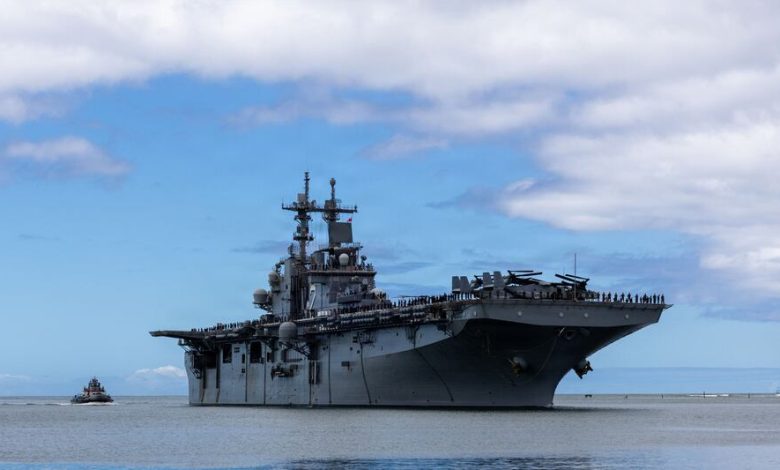
Firestorm Labs manufactured more than 1,000 parts and 12 of its proprietary 3D-printable first-person view Squall drones aboard the Wasp-class amphibious assault ship USS Essex as it transited toward RIMPAC 2026 in Hawaii, according to a release.
“Every part xCell printed on deck is one that doesn’t need to be flown or shipped across contested waters — cutting the fuel, aircraft hours, and personnel it takes to keep a ship operational,” a social media release said. “Repairs that once meant days or weeks waiting on a resupply run can now happen in hours, on station.”
Firestorm Labs created the xCell as a factory-in-a-box that can be deployed aboard U.S. Navy vessels to churn out unmanned aerial systems and spare parts for expeditionary warfare.
As waves as high as 12 feet crashed against the ship, service members assembled drones that were later flown as adversary aircraft during a counter-drone exercise at RIMPAC 2026 in Hawaii.
The service members also helped print mechanical test components that assessed the efficacy of the 3D printer used for drone production and fabricated military repair parts that crew members of the USS Essex needed.
The Defense Department, and Navy in particular, is laser-focused on building out modular payload capabilities that can deliver mission-ready assets for the service.
Chief of Naval Operations Adm. Daryl Caudle announced the “containerized capability campaign plan” in March at the McAleese Defense Programs conference.
Caudle outlined a vision in which transportable containers housing defense capabilities such as drones and weapons can be deployed to any region in the world.
In May, the Pentagon announced framework agreements with defense companies Anduril, CoAspire, Leidos and Zone 5 to acquire more than 10,000 containerized missiles over three years beginning in 2027.
The move signaled the launch of the “Low‑Cost Containerized Munitions (LCCM) program.”
Riley Ceder is a reporter at Military Times, where he covers breaking news, criminal justice, investigations, and cyber. He previously worked as an investigative practicum student at The Washington Post, where he contributed to the Abused by the Badge investigation.
Read the full article here