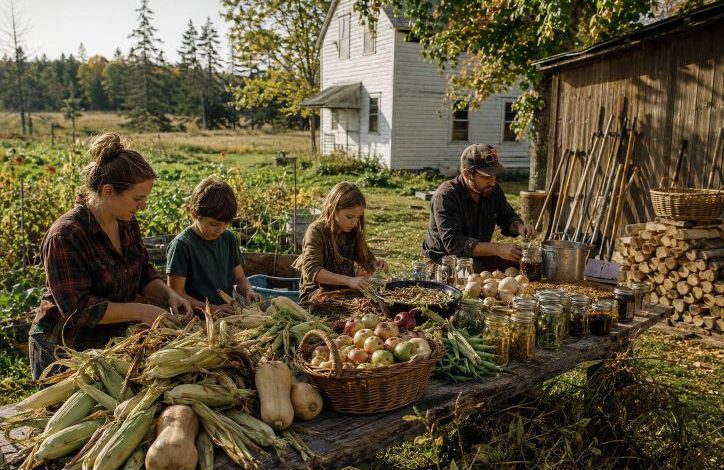

Modern life has gradually replaced the calendar of the land with the calendar of appointments, notifications, and deadlines. Earlier generations lived differently because much of their work depended on recognizing what the season was already telling them. They knew roughly when maple sap would begin to run, when frozen ground would finally loosen, and when changes in weather or animal movement signaled that another stage of the year had arrived.
For Native communities, pioneer families, and Amish households, the year was not simply a sequence of twelve equal months. It was a repeating cycle in which certain periods demanded intense labor, others were better suited to repair and planning, and some were deliberately reserved for worship, visiting, and rest.

These traditions were not identical, and each grew from different beliefs and circumstances, but they shared a practical principle. Families functioned better when necessary work was attached to the season most suited to it. Instead of treating every shortage or unfinished job as a surprise, they knew approximately what had to happen next and prepared for it before the window opened.
A calendar built around conditions
Earlier seasonal calendars were based more on observable changes than fixed dates. Native peoples across North America used names connected to recurring events, which is why terms such as Strawberry Moon, Green Corn Moon, and Hunger Moon became associated with particular times of year. Such names were more than labels because they reflected what the land was producing and what work needed attention.
When berries began ripening, gathering and drying could begin. When crops reached a certain stage, another kind of work followed. Seasonal observations became a practical way of organizing the community.
Pioneer households used similar environmental signals alongside almanacs and religious dates. One traditional sign for planting corn was to watch until oak leaves reached roughly the size of a squirrel’s ear. Livestock behavior, birds, weather patterns, and soil conditions were all useful sources of information.
Amish farmers still rely heavily on weather and ground conditions when organizing field work rather than assuming that a date on the calendar automatically means the soil is ready.
The advantage is flexibility. A fixed planting date can fail during an unusually cold spring, while a system based on actual soil warmth adjusts with the season. A modern household can use the same idea by paying attention to local conditions instead of assuming that every year will behave exactly like the last.
Winter was for repair, planning, and learning
Winter did not mean that useful work stopped. It meant the type of work changed, usually to an enclosed environment.
Harness leather could be cleaned, stitched, and oiled while tools were sharpened and repaired. Quilts were pieced, seeds were sorted and tested, and families reviewed the previous year’s accounts before planning the next one. Among Plains families, winter camps also provided time for elders to teach, stories to be shared, and hides to be turned into clothing that would be needed later.
Amish households continue to use winter for many of the same quieter forms of work. Time moves toward woodworking, sewing, bookkeeping, maintenance, and visiting neighbors. Weddings have traditionally been concentrated in late fall and winter partly because agricultural work slows enough for families and neighbors to give an entire day to the occasion.
A modern household can treat winter as its planning season as well. January is a good time to map the garden, estimate what food needs to be preserved, list household repairs, work out costs, order seed, service equipment, and replace supplies that were used during the previous year.
The value is not simply organization. A household that enters spring with a written plan can spend the growing season carrying it out instead of repeatedly deciding what needs to happen next.
Late winter and spring brought the first rush
Some of the year’s important work began before winter had completely disappeared.
Maple sugaring depended on a narrow period when nights dropped below freezing while daytime temperatures climbed above it. The Haudenosaunee and other northeastern nations recognized this season with maple ceremonies long before settlers began tapping trees. Because that productive window lasted only a limited time, missing it could mean losing an important source of sweetener for the year.
Other spring work gathered around the same period. Seeds were started, chicks arrived, fences were inspected, and soil was worked once it became dry enough to crumble rather than smear.
Fresh wild greens were particularly welcome after months of stored food. Dandelion, nettle, ramps, and fiddleheads appeared as foods associated with the return of spring and were also valued medicinally.
For a modern homestead or preparedness-minded household, late winter can still serve as the transition from planning into physical work. Start seedlings, arrange for poultry if that is part of the household plan, check what remains in storage, inspect fences, and repair equipment before the workload becomes heavier.
Jobs completed during this period do not have to compete with the much more demanding weeks that follow.
Spring and early summer were the main building season
Once workable ground returned, the pace accelerated dramatically.
Pioneer families needed to get corn, potatoes, beans, squash, and other crops planted within a growing season that had firm limits on both ends. Native agricultural communities used systems such as planting the Three Sisters together, combining corn, beans, and squash within the same growing area.
Livestock added another layer of work because calving and lambing often overlapped with planting season. Families could find themselves managing fields during the day while checking animals at all hours.
Construction also fit naturally into spring and early summer. The weather was more cooperative, but the major harvest had not yet begun. Barn raisings, cabin work, and fence building could therefore be concentrated into this period, and Amish communities still place significant construction work within the same seasonal window.
Anyone building a modern yearly rhythm should recognize this as one of the busiest stretches of the year. Work that can wait should not compete with planting and essential outdoor projects because a garden planted several weeks late remains several weeks behind as the season advances.
Midsummer required steady work
High summer can appear less frantic than planting or harvest, but it brought its own demanding routines.
Haying was especially dependent on weather. Cut hay that was caught in rain could mold, and improperly stored hay could create dangerous heat inside a barn. Families therefore watched the sky closely, cut when conditions looked favorable, and continued working until the hay was safely stored.
The rest of midsummer was filled with weeding, watering, hauling, and harvesting early crops such as peas, greens, and beans.
Many Native communities also followed the ripening of different plants and the timing of fish runs during summer. Rather than waiting for one enormous harvest, they dried and stored foods as they became available. That approach spread both the labor and the risk across the season.
A modern version can work in much the same way. Instead of allowing everything to pile up for one exhausting preserving session in September, small batches can be handled as they reach their best condition. Beans can be frozen as they mature, herbs can be dried when they peak, and the pantry can fill gradually.
Late summer and fall closed the loop
Autumn was when much of the year’s earlier work finally produced its return.
Corn was harvested, squash cured, apples were pressed, and root cellars filled with crops such as potatoes, carrots, and cabbage. Among Cherokee, Creek, and Iroquois communities, green corn festivals marked the arrival of the first ripe corn with ceremonies that included feasting, thanksgiving, and other community traditions before the remaining work continued.
Butchering was also strongly tied to the season. Cold weather made it safer to hang and process meat, which helped explain why hog killing traditionally followed the first hard frost. Large animals also created more work than one household could easily manage in a day, so neighbors commonly exchanged labor.
Meat went through several forms of preservation and processing as smokehouses operated, lard was rendered, and sausage was prepared, with families trying to waste as little edible material as possible.
For a modern household, fall is the time to finish the cycle before winter closes in. Freezers and pantry shelves are filled, gardens are put to bed, firewood is secured, and heating systems are checked while outdoor work can still be completed comfortably.
Hunting and fishing followed their own calendar
Wild food also had seasonal timing rather than being pursued entirely at random.
Deer hunting was associated with fall, when animals carried more fat and cooler weather helped with meat preservation. Hunts were also timed to avoid periods when females were raising young, and many Native nations maintained such restrictions through custom.
Waterfowl followed migration patterns, small game contributed during colder months, fish were taken according to seasonal runs, and trapping was concentrated in cold weather when pelts were at their best.
Because these windows were predictable, families could roughly anticipate when different sources of protein might become available.
The same approach can help modern households that hunt or fish. Seasons can be written onto the yearly calendar from the beginning, with scouting, equipment preparation, rifle sighting, and freezer space handled before opening day instead of after the opportunity has already arrived.
Rest and worship were part of the schedule
Another important part of these seasonal systems was that rest was built into the year instead of being postponed until every task was finished.
Amish families traditionally set Sunday apart, with church every other week and visiting on alternate Sundays, while holidays such as Christmas, Good Friday, Ascension Day, and Thanksgiving also interrupt ordinary field work. Pioneer households observed the Sabbath and participated in events such as camp meetings and harvest celebrations. Native communities likewise held seasonal ceremonies connected with midwinter, green corn, and fall thanksgiving.
These gatherings served social as well as religious purposes. Families who lived apart could meet, information moved through the community, disputes could be addressed, marriages arranged, and people were reminded that the year contained something beyond constant labor.
A modern seasonal plan benefits from the same principle. Rest days and celebrations should be placed on the calendar deliberately rather than treated as something that happens only when there is nothing left to do.
Building your own seasonal rhythm
A simple yearly plan can begin with one page divided into four seasons. Under each section, list what needs to be produced, repaired, stored, and celebrated.
Winter can emphasize planning, repairs, and learning. Spring can carry planting and construction. Summer can focus on tending crops and preserving steadily, while fall becomes the season for harvest, butchering, fuel, and preparations for cold weather.
The transition periods deserve particular attention because they are when families can easily fall behind. The weeks before planting, first frost, and deep winter each contain recurring jobs that can be turned into checklists and reused every year.
Review the plan each January and adjust it according to what worked and what failed during the previous cycle.

Conclusion
Native communities, pioneer families, and Amish households were never protected from hardship simply because they followed the seasons. Crops failed, winters became severe, animals were lost, and carefully made plans sometimes went wrong.
What a seasonal rhythm provided was a way to meet those problems with part of the work already completed. Food might already be stored, wood stacked, seed saved, equipment repaired, and relationships with neighbors strengthened before trouble appeared.
Modern households can build the same kind of structure without trying to recreate the past. Divide the year into seasonal blocks, identify the work that belongs in each one, mark the windows that cannot be missed, and reserve genuine time for rest and celebration.
After following the plan through one complete year, revise what did not work and begin again. With each cycle, the calendar becomes less about reacting to whatever arrives next and more about preparing for the work while there is still time to do it properly.






Read the full article here