
Vice President JD Vance said the administration would work toward giving the widow of a deceased airman killed during the war in Iran the additional military benefits allotted to families of service members killed during combat.
Libby Klinner, the wife of Alex Klinner, turned to social media to share the story of her husband’s passing and the struggles her family was facing in receiving certain additional benefits since the federal government did not officially declare war on Iran.
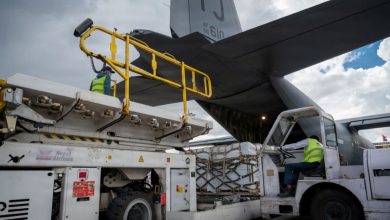
U.S. Air Force Maj. John “Alex” Klinner, 33, of Auburn, Alabama, was among the six killed on March 12 when a KC-135 refueling aircraft crashed over western Iraq during combat operations against Iran. Klinner was the chief of Squadron Standardizations and Evaluations within the 99th Air Refueling Squadron, located in Birmingham, Alabama.
He entered the Air Force in 2017 and deployed in 2019, 2020, 2022 and 2026 for a range of missions — flying 362 combat hours and 181 combat support hours in theater. His achievements include the Air Medal with oak leaf cluster, Aerial Achievement Medal and Air and Space Commendation Medal with oak leaf cluster.
Recently, Libby posted on Instagram that her casualty assistance officer told her that additional combat-related benefits, such as Hostile Fire Pay or Imminent Danger Pay and Combat Zone Tax Exclusions, could not be given to her family because the U.S. has not officially declared war against the Middle East country.
“The Air Force recently told me that because we haven’t officially declared war, my kids and I aren’t eligible for some benefits,” Libby wrote. “So not only was my husband killed in a war he never wanted to participate in, but now the benefits we’re left with are being dictated by semantics and public perceptions.”
In a later post, Libby said that the director of mortuary affairs reached out to her to audit the benefits.
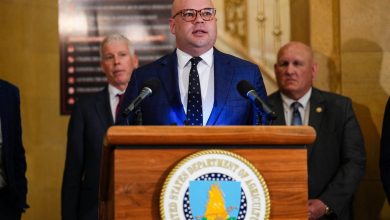
On Thursday, Vance said the administration would reach out to Libby directly to ensure she receives “what she is entitled to.”
“We will certainly work that on the back end,” Vance told reporters in a White House briefing.
Libby did not return a request for comment from Military Times.
Libby has since taken down her personal Instagram with the original posts, but a statement of hers circulated social media on Thursday, saying “classification issues” caused the combat-related benefits to not be available for her family.
“That was the information I shared publicly at the time,” Libby wrote. “As the story spread, however, it created the impression that our family’s military benefits had been broadly denied or withheld, which was not the case.”
She said that the Department of Defense has since completed its review and confirmed her family’s benefits. Libby wrote that the experience highlights how challenging it can be to navigate classifications, terminology and government processes during a time of grief.
“No Gold Star family should have to become an expert in government language to understand what they are entitled to,” she said.
“Getting this right for the families left behind isn’t a footnote—it’s part of how we honor the service and sacrifice of those we lost,” she concluded.
Department of the Air Force officials spoke with Libby on Monday to address her questions and ensure she is receiving all eligible benefits her and her family are entitled to, an Air Force spokesperson told Military Times on Friday.
The spokesperson said that officials confirmed that all eligible combat theater benefits were included in the areas of pay she already received, including Imminent Danger Pay or Hostile Fire Pay and Combat Zone Tax Exclusion benefits.
Alongside other benefits spouses retain, Hostile Fire Pay, at the rate of $225 per month, is given when a service member is killed, injured or wounded by hostile fire, explosion of a mine or other hostile actions. Imminent Danger Pay, $7.50 for each day on official duty in a designated area up to $225 a month, is given when an airman is ordered to fly in an airspace designated as an imminent danger for a mission.
Service members can receive one pay or the other but not both. When a service member is entitled to one form of pay, they may also be eligible for Combat Zone Tax Exclusion, which excludes certain pay from their taxable income.
The Air Force spokesperson did not say which pay the Klinner family is entitled to.
The Department of Defense also provides a one-time, tax-free sum of $100,000 as a Death Gratuity to survivors of members of the armed forces who died while on active duty or in certain statuses.
Cristina Stassis is a reporter covering stories surrounding the defense industry, national security, military/veteran affairs and more. She previously worked as an editorial fellow for Defense News in 2024 where she assisted the newsroom in breaking news across Sightline Media Group.
Read the full article here