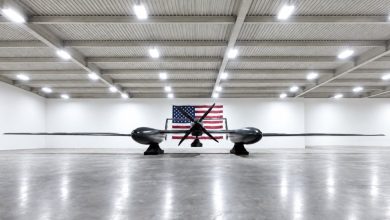

The FQ-42A and FQ-44A, the U.S. Air Force’s newest Collaborative Combat Aircraft, have been dubbed “Vengeance” and “Fury,” respectively.
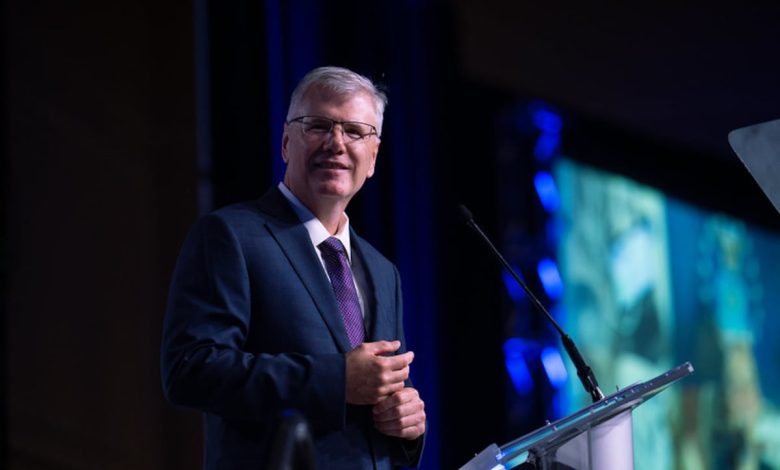
Secretary of the Air Force Troy Meink used the names for the first time during a Monday keynote address at the Air & Space Forces Association’s 2026 Air, Space & Cyber Conference while announcing that the Air Force intends to have at least 500 autonomous aircraft in service by 2032. The CCAs are expected to perform many of the same missions manned fighters complete currently.
“Because of the steps we are taking today, we will have a significantly different force by 2032,” Meink said at the conference. “By then, our special operators will have the ability to employ thousands of autonomous one-way attack systems, and we will have autonomous fighters like the Collaborative Combat Aircraft.”
Meink highlighted that the aircraft went from contract award to first flight in fewer than 18 months, “almost unheard of in aircraft development.”
General Atomics’ FQ-42A took its first test flight in August 2025 — over a year after its contract was awarded. Anduril, the second defense company tasked with production of the FQ-44A, rolled its first aircraft off the assembly line in July after flight testing in October 2025.
Recently, the force completed its first-ever live-fire test with Anduril’s FQ-44A, executing an end-to-end, beyond-line-of-sight strike against a simulated target using an inert AIM-120.
The CCAs are not the only class of autonomous aircraft the service is “aggressively” pursuing, Meink said, spotlighting how the ISR strike platforms have been essential during Operation Epic Fury and how the MQ-9 Reaper and the Unmanned Long-endurance Tactical Reconnaissance Aircraft, or ULTRA, have both been utilized by the service.
The Air Force is furthering the development of Massed Modular Aircraft, or MMAs, a family of low-cost, multi-role strike platforms meant to succeed the MQ-9 Reaper. Meink asserted that the service intends to field 100 in 2029 at a lower cost than the CCAs and a fraction of the cost of manned aircraft being built today.
“MMAs will provide affordable, attributable, long-range strike, and we will be able to field them at scale,” Meink said. “We expect to have tens of thousands in the inventory by 2030. Matter of fact, they’re already being used today.”
Meink said that for his goal to become a reality, Congress and industry partners need to provide more resources to generate prototypes and production at scale.
For the CCA program, the service’s fiscal 2027 budget request included $996.5 million in procurement funding, as well as $150 million in advanced procurement for the following fiscal year and $1.37 billion in continued research and development, for a total program request of $2.37 billion.
Cristina Stassis is a reporter covering stories surrounding the defense industry, national security, military/veteran affairs and more. She previously worked as an editorial fellow for Defense News in 2024 where she assisted the newsroom in breaking news across Sightline Media Group.
Read the full article here