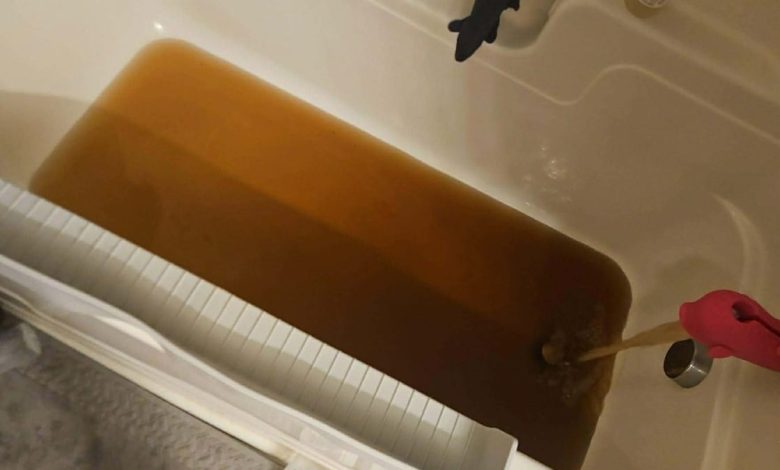

Brown water issues are reportedly burdening residents of military housing on certain bases as the military continues its campaign to improve service member quality of life.
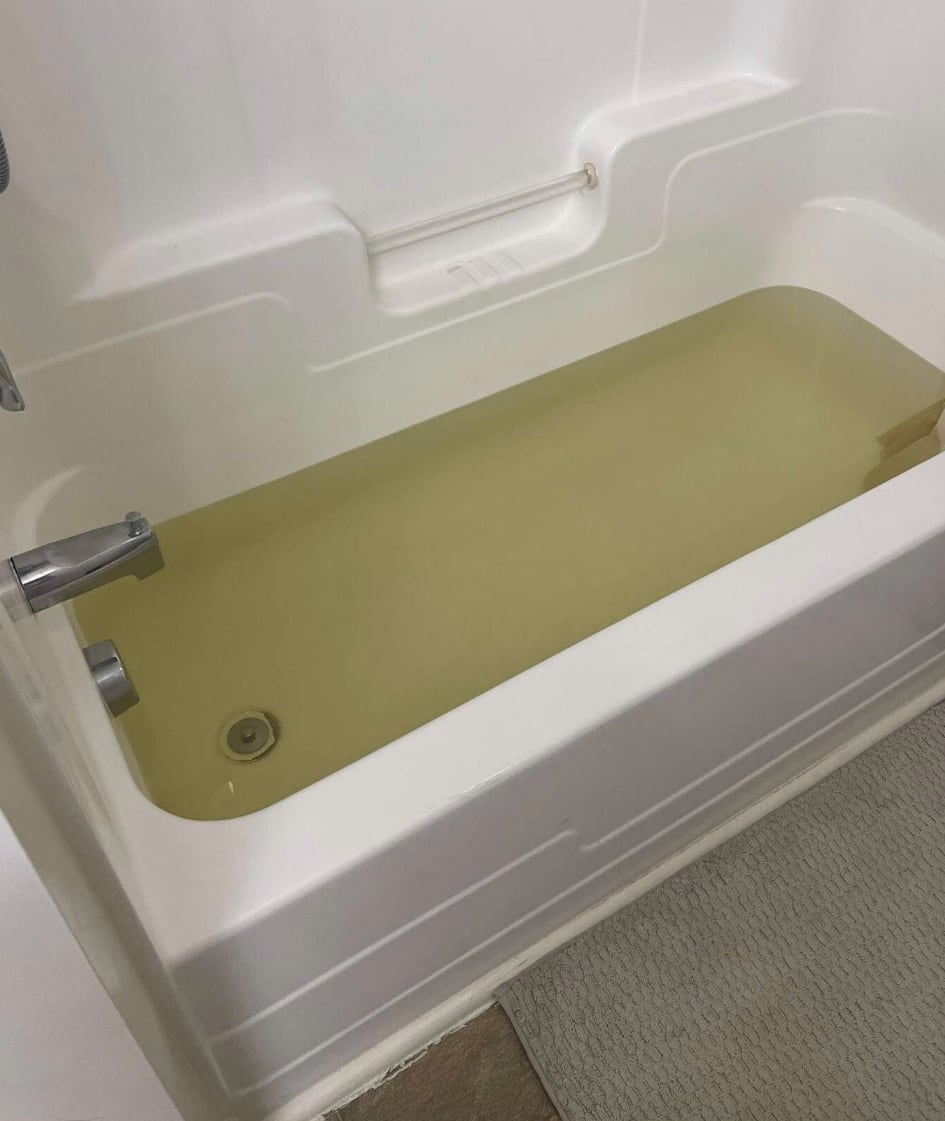
Personnel who live in base housing have long cited struggles with lackluster living conditions, but recent photos from Joint Base McGuire-Dix-Lakehurst show a alarming trend of water discoloration.
At least four pictures of murky water from residents at Joint Base MDL circulated on the popular Air Force amn/nco/snco page this past month, prompting United Communities, which operates privatized military housing on the base, to address the issue in a statement.
“We are working in close coordination with Joint Base leadership and their water team to resolve water discoloration issues as they arise,” the Jan. 9 statement reads.
United Communities pointed at the installation as the water provider and stated that the base is responsible for the water plant and overall quality of water. The organization added that they only own and maintain the water mains within the housing areas.
A Joint Base MDL official confirmed the authenticity of the memo to Military Times on Friday and shared a copy.
“Access to safe, reliable water is a basic expectation, and when issues arise our top priority is to respond quickly and in coordination with our United Communities housing partners,” base officials said in a statement provided by the spokesperson. “We are actively engaged to ensure both immediate and long-term solutions are in place.”
United Communities noted in the memo that they recently contracted with Paetzold Construction to run an additional water line within certain neighborhoods. That project is set to begin within the next month, with completion slated for late winter, the memo stated.
“This new line will improve the water loop and ensure a continuous flow of water in and out of the neighborhood,” the statement says.
The base spokesperson, meanwhile, told Military Times the discoloration is believed to be from sediment in portions of the water distribution system.
The upgrades, like the new main water line designed to create a “better loop,” are meant to improve the continuous flow of water and prevent sediment from settling in the pipes, the spokesperson added.
The United Communities statement claims that residents can run cold water until the discoloration clears, and adds that those impacted should avoid running hot water to prevent sediment from entering the water heater. The housing manager also noted that a maintenance team can flush the resident’s water heater if hot water continues to be discolored.
In response to how long water discoloration issues have been reported at the base, the spokesperson said isolated reports can occur at any installation, but the base is focused on a permanent solution.
“The infrastructure upgrades currently underway are the result of a deliberate engineering and planning process designed to address the root cause of the issue and ensure the long-term reliability of the system for our families,” the spokesperson said.
The McGuire Drinking Water System obtains water from the Potomac-Raritan-Magothy aquifer, a groundwater source, according to the base’s latest water consumer confidence report.
The latest water consumer confidence report for Joint Base MDL, which was published in June 2025, monitored the water from Jan. 1, 2024 to Dec. 31, 2024. It found that the tap water met the drinking health standards for the Environmental Protection Agency and the New Jersey Department of Environmental Protection.
The base spokesperson said the McGuire Drinking Water system is regularly tested in accordance with the EPA in the Safe Drinking Water Act and the NJDEP Safe Drinking Water Act Rules.
But in an independent water quality testing conducted by TapWaterData, it found that even though Joint Base MDL’s water meets all federal standards, it still contains four contaminants above EPA’s health-based guidance.
That test recommended that a certified water filter be used to reduce exposure. The platform’s data was last updated at the end of March 2024.
Issues with base housing are not new to service members, as others have recently claimed to face similar challenges.
On other bases around the country, there have been reports of black mold, contaminated water and asbestos in the ceilings and walls, resulting in health and readiness issues for residents as well as out-of-pocket costs.
In October 2025, Change the Air Foundation conducted a survey of 3,401 service members and families from 57 military installations across 30 states and Washington, D.C. to determine the effectiveness of the current systems and policies in place for military housing.
The survey found that at least 97% of those surveyed had at least one significant or dangerous issue in their military housing, with over 50% reporting water damage and 35% reporting water contamination, discoloration and unusual taste or odor.
“After my son went to the ER twice in a week for very elevated heart rate, we emergency evacuated out of our house,” an active Marine service member in Florida said of their housing in the survey.
Congress is aware of this issue, with a proposed law introduced on Jan. 15 coined the Military Occupancy Living Defense Act, or MOLD ACT.
The act would require privatized military housing companies to bear all financial responsibility for mandated mold inspections and refund military families’ payments made through their Basic Allowance for Housing when their previous homes were uninhabitable.
It would also require the Defense Department to establish standards for acceptable levels of humidity, ventilation, dampness and water intrusion.
But certain topics in the legislation, like reimbursement, have faced questions from legal experts and military families on proper enforcement.
Cristina Stassis is a reporter covering stories surrounding the defense industry, national security, military/veteran affairs and more. She previously worked as an editorial fellow for Defense News in 2024 where she assisted the newsroom in breaking news across Sightline Media Group.
Read the full article here