
KYIV, Ukraine — “The problem with this round of negotiations is that they lack all credibility,” one senior European diplomat with knowledge of the peace process told Military Times this week. “It’s just stupid.”
The exasperation of the official, who was granted anonymity to discuss negotiations that are sensitive and ongoing, comes after weeks of what he described as an “endlessly frustrating” peace push — built around damage control, public pressure and shifting drafts — that has forced Ukraine and its European backers to “pretend to play along” even as demands circulated that are “impossible for Ukraine to accept.”
“There is no art to this deal-making,” he added.
It started with a leak. On Nov. 20, just as President Donald Trump began floating a Thanksgiving countdown for a deal, a 28-point peace framework was made public by Axios. Within hours, the same set of points was being described in different rooms as an opening bid, a near-finished agreement or an instrument of pressure so one-sided that critics compared it to information warfare.
Kyiv’s posture through that early confusion was restrained. It stayed publicly disciplined, offered little detail and declined to engage the leak-driven blow-by-blow, while allies tried to work out what the process actually meant in real-time.
By Dec. 4, the anxiety had broken the surface. Der Spiegel published a leaked transcript of a private European call that sounded less like allied coordination than emergency self-defense.
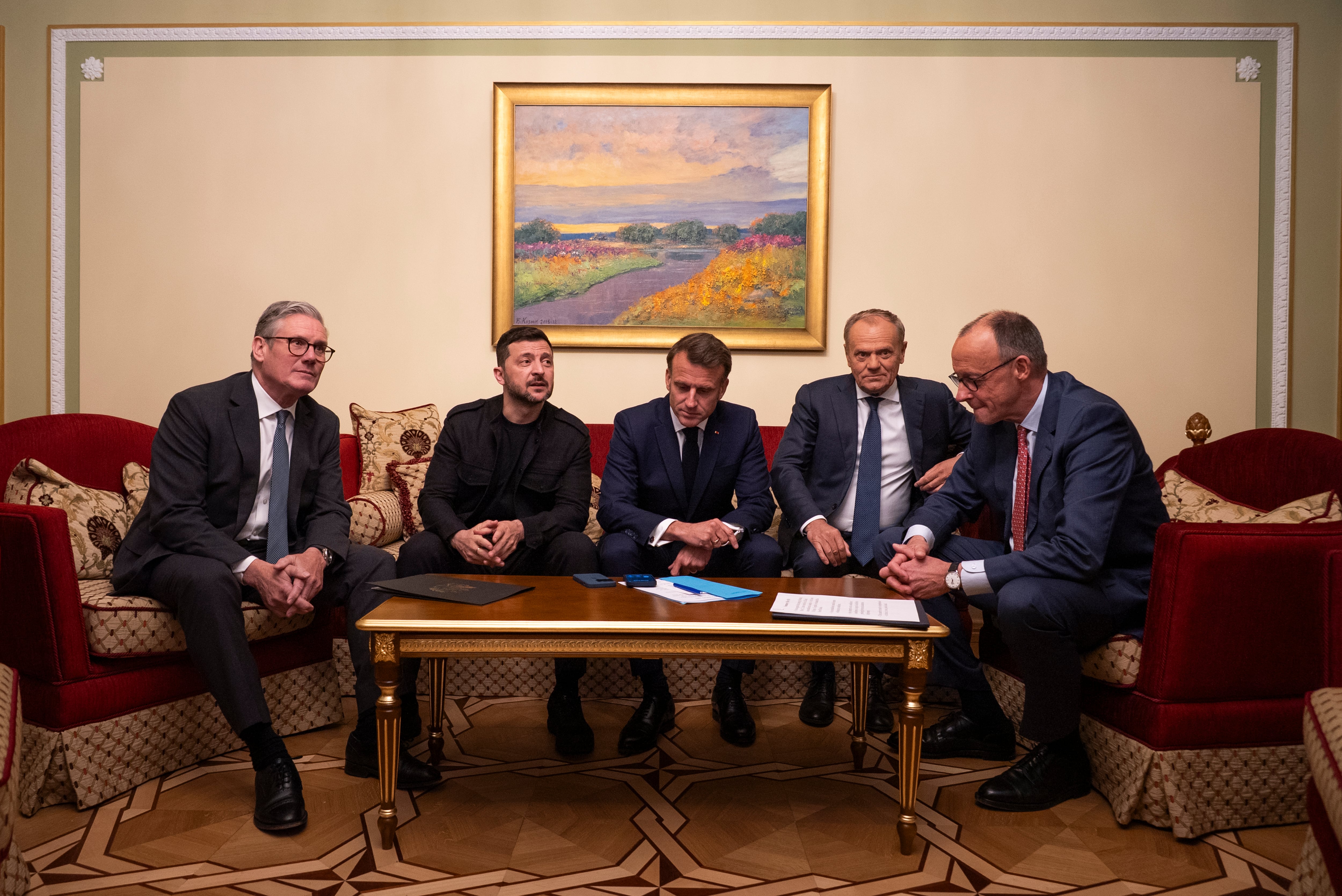
French President Emmanuel Macron warned the U.S. might “betray Ukraine on the issue of territory,” a phrasing the Élysée later disputed. German Chancellor Friedrich Merz said Washington was “playing games — both with you and with us.”
Finnish President Alexander Stubb said it most strikingly: “We cannot leave Ukraine and Volodymyr [Zelenskyy] alone with these guys.”
Two days later, the timeline snapped into place. After several days of U.S.-Ukraine talks in Miami, Washington formalized its new posture in the National Security Strategy — including language about “strategic stability with Russia” and “ending the perception, and preventing the reality, of NATO as a perpetually expanding alliance.”
Moscow welcomed the framing while rejecting key elements of the peace track.
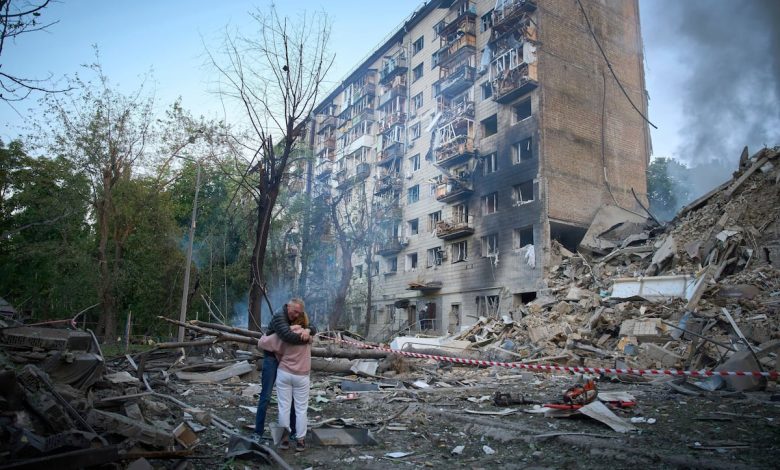
For those in uniform, the unpredictability goes beyond politics: Russia followed the Miami talks with one of its largest combined attacks on Ukraine, sending 653 drones and 51 missiles aimed largely at Ukraine’s energy infrastructure, according to officials in Kyiv.
The so-called peace negotiations are driving real decisions about war posturing and capabilities as Russia’s full-scale invasion trudges into its fourth year.
By Dec. 7, the messaging shifted decisively from pressure to strategic uncertainty. At the Doha Forum, Donald Trump Jr. was asked if his father might walk away.
“I think he may,” he said. “What’s good about my father, and what’s unique about my father, is you don’t know what he’s going to do. … The fact that he’s not predictable … forces everyone to actually deal in an intellectually honest capacity.”
As drafts leak and deadlines slide, the uncertainty is now showing up in major battlefield calculations.
The likely product, the official says, is a messy ceasefire that freezes lines, buys Russia time and forces Europe to plan for the war’s next phase — less peace through strength than war through instability — with U.S. support treated as a variable, not a guarantee.
Peace through strength or war through uncertainty?
The volatility hits where it always hits first: logistics and posture. Ship now or hold. Plan for a pause or plan for another winter of strikes.
“It’s a pinball machine inside the head of our president, because he keeps bouncing off the walls of the pinball machine, and you just don’t know where he’s going to go next,” Ian Kelly, a former head of the State Department’s Office of Russian Affairs and U.S. ambassador to Georgia and the Organization for Security and Cooperation in Europe (OSCE), told Military Times.
The Miami talks offer the clearest example of what Kelly meant. The public story of “progress” has moved faster than officials across the Atlantic could keep pace, leaving them questioning what the Americans are actually proposing, what Moscow is actually prepared to concede and what Washington is willing to guarantee.
Zelenskyy’s language has stayed deliberately narrow. Over the weekend, he described the discussions with Trump’s envoys as “constructive, though not easy,” stressing that “the American envoys are aware of Ukraine’s core positions,” but that “some issues can only be discussed in person.”
Defense Minister Rustem Umerov reinforced the same reality in plainer terms.
In a Dec. 8 post on X, Umerov wrote, “We have worked for several days in the United States together with Andrii Hnatov with representatives of President Trump. I am grateful for the constructive work.”
Umerov added that “the primary task of the Ukrainian team was to obtain from the American side complete information about their conversation in Moscow and all drafts of current proposals in order to discuss them in detail with the President of Ukraine.”
Kyiv’s diplomats have also been trying to rein in the chaos.
“Being in the same negotiation room with [Kushner] and [Witkoff] for the second day in a row, I’d say conspiracies spread in media are false,” wrote First Deputy Foreign Minister Serhiy Kyslytsya on Monday. “I’m positively impressed with the level of understanding of Ukrainian interests and position by the American partners.”
“It’s important that the American side remains fully engaged in the peace process,” he said in an earlier post the same day. “Every team listens carefully to each other. The Ukrainian position is very clear,” noting that it was “unfair to mischaracterize [the] approach of the American team while they [are] investing time, efforts, and resources into” a path to “just and sustainable end of the war.”
The Kremlin’s public posture has offered its own version of forward motion.
Last month, Moscow envoy Kirill Dmitriev hailed the talks as expert-level diplomacy that was highly “productive” — even as he remained steadfast that key elements still needed work, according to Reuters.
Putin attempted to clarify the Kremlin’s position on Wednesday at an annual meeting with the defense ministry, where he called European leaders “little pigs” and blamed its invasion of Ukraine on mismanagement by the previous U.S. administration of President Joe Biden, according to a report by The Guardian.
Putin’s comments came just hours after U.S. officials told reporters in Berlin that the negotiators had resolved about “90%” of their differences, including agreement among Ukraine’s partners on “NATO-like” security guarantees, per The New York Times.
The mixed signals and shifting drafts have turned the peace process itself into leverage, Kelly said, by determining who gets consulted early, who gets read in late and who thinks they can wait the other side out.
“Europe has to basically operate on the assumption that they cannot count on the United States when it comes to Ukraine,” Kelly said.
He could not recall a comparable moment of discord and miscommunication in modern transatlantic security.
“I can’t think of a single document that impacts European security, especially vis-à-vis Russia, that hasn’t been previewed with the Europeans,” he said. “That’s unprecedented … since World War II.”
For military planners, that kind of uncertainty doesn’t stay in the diplomatic lane. When the negotiating text is still moving, and the U.S. signal can shift from one week to the next, it lands immediately in force-planning decisions impacting what allies schedule to ship, what they delay, what they assume about sustainment and how they message deterrence while Russia keeps probing for weakness.
“The negotiations are a strategic tug-of-war,” the diplomat told Military Times, “between Ukraine and Europe on one hand, and the Russians on the other,” with the decisive variable being “where the U.S. will be.”
Kelly is blunt about how he believes the Kremlin is seeing the situation today.
“He’s … riding high,” he said, convinced Putin thinks his military is winning — despite their slow rate of advance, soaring casualty rates and meteoric costs to the Russian economy — while the West looks “ineffectual and unable to … stop him.”
“There’s no point in negotiating with Putin until you get him off of that calculation.”
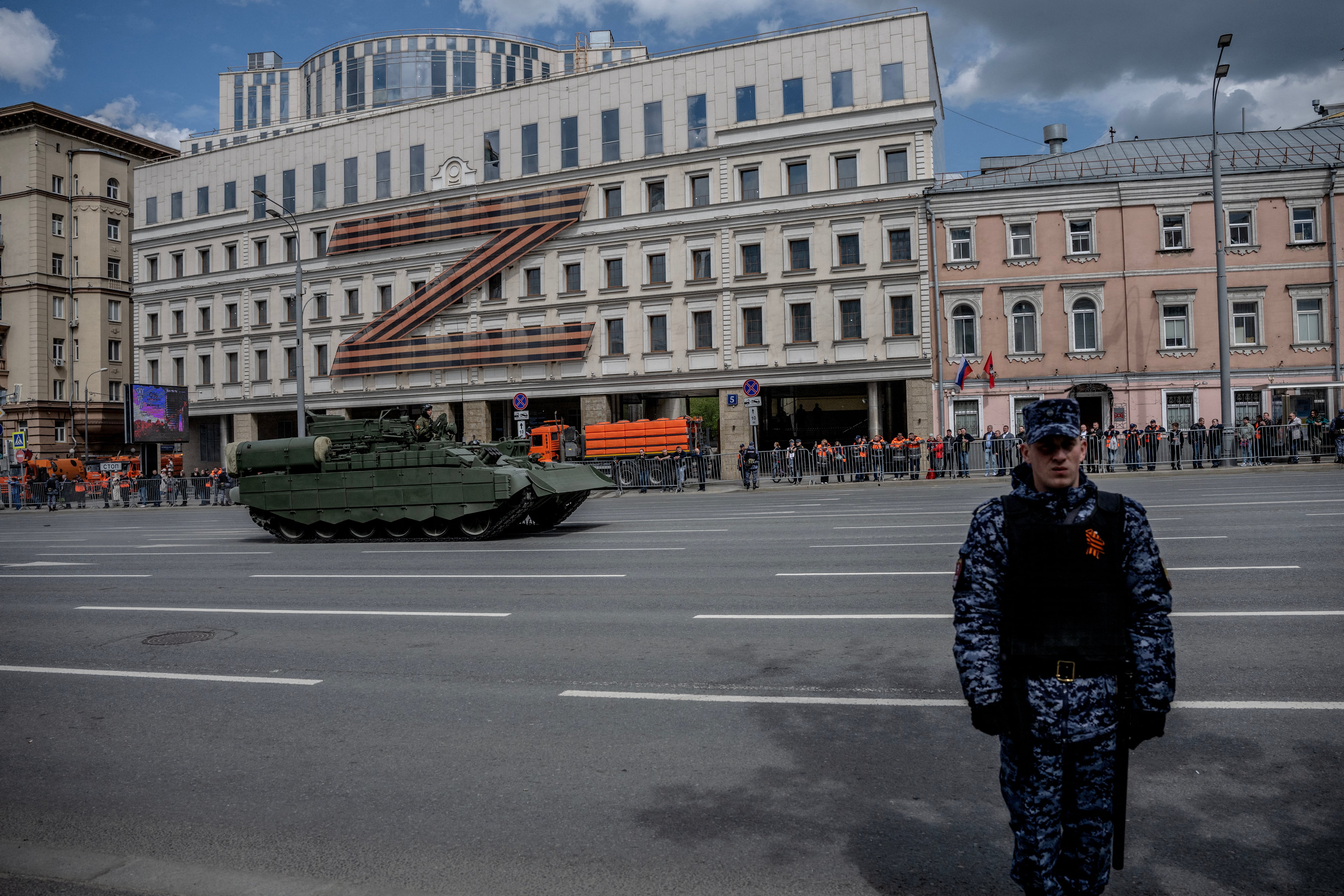
The current diplomatic math signals Western hesitation, which numerous officials argue gives Moscow an incentive to sit tight — not to end its invasion.
“If something comes out of this, at most it will be a messy ceasefire that is likely to be relatively short-lived,” the European official said. “And the benefits are questionable.”
But a freeze doesn’t end the planning burden. It shifts it into enforcement, into resupply and regeneration and into deterrence messaging about what the coalition is actually prepared to do when the terms get tested.
For Europe, “post-ceasefire” becomes the next phase of the war plan — not an off-ramp.
A new diplomacy of instability
The peace plan documents are still multiplying as talks continue this week.
On Thursday, a Ukrainian official close to the peace talks said Kyiv had handed Washington a revised 20-point proposal, “slightly rethought,” not a new version, alongside separate documents covering security guarantees and economic reconstruction.
“Right now, there are three documents,” the official told ABC. “The basic 20 points, the security guarantees and the document on the economy and reconstruction. Yesterday, we discussed the economy. Today, the guarantees.”
U.S. officials, meanwhile, have floated “Article 5-like” security guarantees, the so-called “platinum standard,” short of NATO membership, even as officials have acknowledged privately that the details are hard to define and enforcement would be politically constrained.
The sequencing matters: as public talk leans toward closure, negotiators are still trading paper and trying to pin down what, exactly, sits inside the guarantees.
That moving-target problem is showing up inside Washington as well.
Secretary of State Marco Rubio has described the proposal as a “living, breathing document,” saying, “Every day, with input, it changes.”
On the Hill, the argument has been sharper about what was changing and what earlier drafts appeared to mirror.
Sen. Angus King, an independent from Maine, said Rubio told senators the proposal that surfaced publicly was “essentially a wish list for the Russians,” language repeated by the European diplomat speaking anonymously.
For Kyiv, the sticking point isn’t just semantic. Maksym Vishchyk, a Kyiv-based international law expert advising the Ukrainian government on the negotiations, put it in black-and-white terms during an interview with Military Times earlier this year.
“Any agreement concluded or procured through the use of force or threat to use of force is a void agreement,” he said, adding that states have an obligation “not to recognize an unlawful situation, meaning first of all, territorial concessions.”
The negotiations become a question of what Ukraine can sign without locking in legal recognition that Kyiv has spent nearly a decade insisting cannot be normalized.
“There is no way they’re going to be able to agree to anything that constitutes a legal, a de jure recognition of transfer of land to the Russians. It’s not going to happen,” the diplomat said.
Vishchyk agreed, noting the dangers of recognizing a coerced agreement that is null and void from the outset.
“Even if Ukraine puts a signature on the paper — which is a peace deal in name only — such consent will not matter because it won’t be consent,” he said, due to Russia’s current occupation of Ukrainian lands creating a scenario where true legal consent is impossible.
Consequently, existing rules of international law would mean that “Ukraine, as a victim without free will, will be entitled to liberate its previously occupied territory at any point in the future, regardless of the passage of time.
“If the peace deal contains any provision on territorial concessions, then such provisions will be void, too,” he added.
Negotiators on all sides understand that reality, which is why the squabble over language in the drafts is doubling as a fight over political and military leverage today and in the future.
The impact is already visible in two arenas — Kyiv’s domestic credibility and Washington’s assessment of the battlefield.
Ukraine’s government is still reeling from its most serious corruption scandal in years, dubbed “Operation Midas,” which found several links between officials and an illegal kickback scheme tied to the energy sector and worth over $100 million, according to the Organized Crime and Corruption Reporting Project.
News from the front is equally chaotic. U.S. Army Secretary Dan Driscoll warned his Ukrainian counterparts in Kyiv last month that their forces faced an “imminent defeat,” and argued it was better to negotiate now than later, according to two anonymous sources speaking to NBC.
But on Monday, Ukraine’s Security Service claimed that it used an underwater drone to strike a Russian submarine in Novorossiysk in what they have called a world first. And despite almost four years of full-scale war, Russia has managed to hold on to about 20% of Ukrainian territory, according to the Institute for the Study of War, down from over 25% that it temporarily occupied at the start of 2022.
Moscow has pushed its own narratives of success around the eastern strongholds of Pokrovsk and Kupiansk at the same time, claiming in late November that Russian forces had surrounded the cities, but a well-timed trip by Zelenskyy to the Kupiansk front squashed the worst of the rumors quickly.
Taken together, there still appears to be no real deal settling into place. It is a power redistribution occurring through peace drafts, security “guarantees” and political pressure, while Kyiv and Europe appear to argue with Washington and Moscow over what the latest and most acceptable version of both the draft and the world’s next security framework will look like.
That’s why the credibility problem of these talks isn’t about rhetoric, the diplomat said. If the security guarantees are still being defined while “progress” is being declared, the real-life consequences on the battlefield and diplomacy start piling up before any decisions are even made.
Such a ceasefire built on a house of cards won’t bring the war to an end for Ukraine or its coalition of allies, he added, but it would broaden the front line from a regional fight into a contest over military dominance and endurance globally, across a shifting balance of power among Russia, China, Europe and the United States.
It then becomes a battle over who carries the burden of deterrence, the diplomat said, and whether the Kremlin believes the Western coalition, whichever allies it may include, will actually enforce its own red lines.
Read the full article here