
PARIS — NATO kicked off operation Arctic Sentry to bolster the alliance’s posture in the high north, after weeks of deliberations by allies how to address claims by U.S. President Donald Trump that security threats in the region require the United States to take control of Greenland.
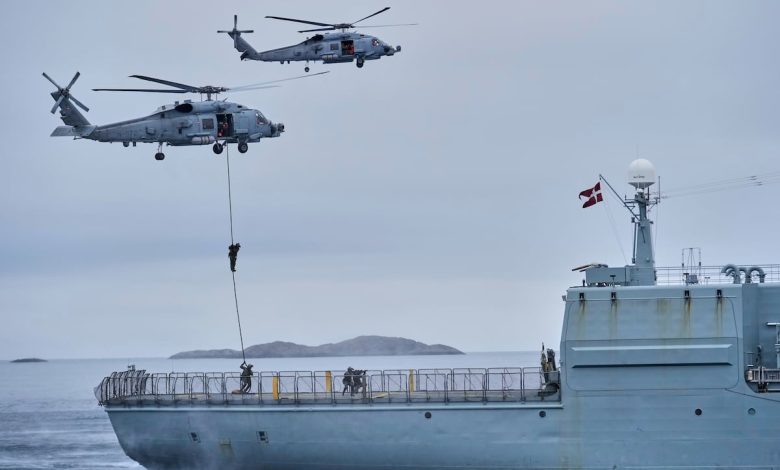
The operation will tie together various allied activities in the region, including Denmark’s Arctic Endurance exercises, NATO said in a statement on Wednesday. Denmark stepped up its military presence in Greenland and invited allies including France and the United Kingdom to join after Trump escalated threats to take over the Danish territory.
NATO Secretary General Mark Rutte and NATO’s military commander for Europe have warned of growing threats in the Arctic and high north from Russia and China, though Denmark has said there are no Chinese vessels near Greenland. As polar ice melts due to climate change, the Arctic is becoming more accessible, raising concerns Russia will increasingly challenge NATO in the region.
“What we are assessing is that there is a real threat” as sea lanes open up, Rutte said at a press conference in Brussels ahead of a meeting of NATO defense ministers on Thursday. “There is every need to make sure that we protect this vital part of NATO territory.”
Arctic Sentry will be led by Joint Forces Command Norfolk and overseen by Allied Command Operations, NATO said. The operation follows a meeting between Trump and Rutte in Davos, Switzerland, in January, where the two agreed the alliance should collectively take more responsibility for defense of the region, according to NATO.
Denmark will contribute “substantially” to Arctic Sentry, Danish Minister of Defence Troels Lund Poulsen said in a statement, though the Danish defense ministry said it’s “too early” to say what the operation will look like exactly.
“The Kingdom has long been pushing for NATO to play a greater role in the Arctic, and in recent months we have intensified that work,” Lund Poulsen said. “That is why I’m extremely pleased that this work is now resulting in concrete action.”
Arctic Sentry will bring all allied activities in the high north into “one overarching operational approach to the region,” which will allow to quickly address any gaps, according to Rutte. The operation will also benefit from “the latest technological insights” from Allied Command Transformation, the secretary general said.
“What is really new about it is that for the first time now, we will bring everything we do in the Arctic together under one command,” Rutte said.
Rutte said that while he can’t comment on all intelligence NATO is getting, “we have a clear sense that the Russians and the Chinese are becoming more and more active there.” He defended Trump’s concerns about Russia and China increasing their Arctic presence as sea lanes open up. “We have to be very watchful and not naive, that’s basically what he’s saying,” Rutte said.
Arctic Sentry will be an “increased vigilance activity” similar to the alliance’s Baltic Sentry and Eastern Sentry operations, under direct authority of the Supreme Allied Commander Europe, according to Rutte.
The United Kingdom plans to double British troops deployed to Norway to 2,000 over three years, the Ministry of Defence said in a separate statement on Wednesday. U.K. forces are expected to play a “vital role” in Arctic Sentry, with military planning underway, according to the MoD.
“Russia poses the greatest threat to Arctic and High North security that we have seen since the Cold War,” U.K. Defence Secretary John Healey said in a statement. “We see Putin rapidly re-establishing military presence in the region, including reopening old Cold War bases.”
The country will deploy 1,500 Royal Marine Commandos to Norway in March for the NATO exercise Cold Response, which will take place across Norway, Finland and Sweden, the MoD said.
The U.K.-led Joint Expeditionary Force will engage in the exercise Lion Protector in September, with hundreds of troops deploying across Iceland, the Danish Straits and Norway to train protection of critical infrastructure and joint command and control capabilities, the U.K. said.
Rudy Ruitenberg is a Europe correspondent for Defense News. He started his career at Bloomberg News and has experience reporting on technology, commodity markets and politics.
Read the full article here