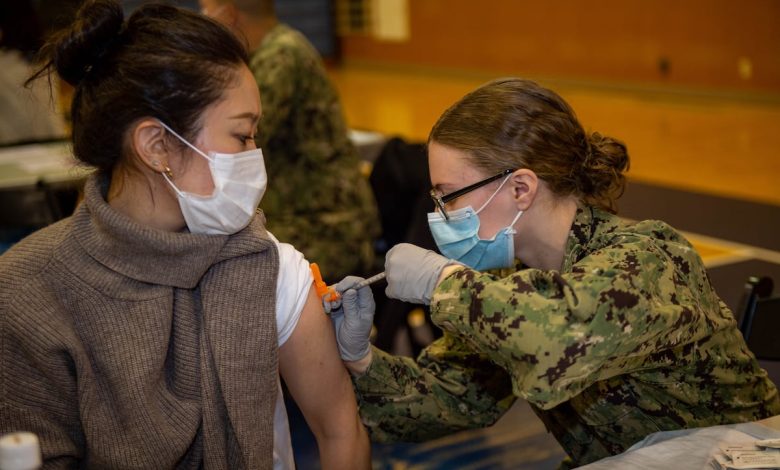

A new study of female U.S. service members has found that contracting COVID-19 can increase the risk of developing high blood pressure or hemorrhage during pregnancy but getting a COVID-19 vaccine before or while expecting did not raise the risk of such complications.
Researchers with the Defense Health Agency’s Armed Forces Health Surveillance Division examined nearly 40,000 deliveries by service women from 2021 to 2023 to determine how a COVID-19 infection or the coronavirus vaccine affected their pregnancies.
Looking at the 5,190 women who contracted COVID-19 during pregnancy and 6,491 who had it before getting pregnant, as well as the 9,263 expecting moms vaccinated during pregnancy and 22,056 already immunized before getting pregnant, the researchers found some interesting results:
- Those who contracted COVID-19 during pregnancy had higher rates of developing life-threatening high blood pressure, known as eclampsia, and bleeding during pregnancy, and those diagnosed with COVID-19 before pregnancy had a higher incidence of bleeding or rupture of membranes associated with childbirth.
- COVID-19 vaccination during pregnancy, however, was associated with lower rates of bleeding, while immunization before pregnancy was linked to lower incidence of pre-term labor or delivery.
“This analysis found no significant difference in adverse pregnancy outcomes among those who received a COVID-19 vaccine prior to delivery compared to women who did not. … COVID-19 infection prior to start of pregnancy was associated with antepartum hemorrhage whereas COVID-19 infection during pregnancy was associated with eclampsia and antepartum hemorrhage,” the researchers wrote in the October Medical Surveillance Monthly Report, published last week.
Previous research done in the general population found that COVID-19 infection is associated with the risk of preeclampsia, stillbirth, preterm birth and admission for babies into the neonatal intensive care unit.
Studies also have shown no safety concerns to the mother or unborn fetus of getting a COVID-19 vaccine, while recent research published in December in JAMA found that those vaccinated against COVID-19 but who later contract the illness are less likely to be hospitalized or experience early delivery.
Despite these findings, the Centers for Disease Control and Prevention in May removed the COVID-19 vaccine from the list of recommended immunizations for pregnant women.
At the time, Health and Human Services Secretary Robert F. Kennedy, Jr., an attorney who for years has questioned the safety of vaccines, said the change brings the country “one step closer to realizing President Trump’s promise to ‘make America healthy again.’”
Physicians groups have come out against Kennedy’s decision. The American College of Obstetricians and Gynecologists “strongly recommends” COVID-19 vaccines for pregnant women. And in July, the American Academy of Pediatrics and several other public health organizations sued Kennedy alleging that he acted unlawfully by bypassing the committees and bodies that make recommendations on vaccines.
The COVID-19 vaccine was developed under the first Trump administration to help stop the spread of the SARS-CoV-2 virus, which at the start of the vaccine initiative, dubbed Operation Warp Speed, had killed 100,000 Americans.
The immunizations relied on a novel technology — messenger RNA — to induce the body to generate a portion of the viral protein that in turn produces an immune response. Following its introduction, the U.S. military required its members to get a two-shot series of the vaccine, with more than 2 million troops receiving the immunizations.
The DHA researchers cited several limitations to their study, including that it likely did not include all COVID-19 infections contracted by pregnant service women during the timeframe because they may not have seen a doctor for their illness. The researchers also looked at women who had received at least one dose but may have not been fully vaccinated and it may have included an overestimate of bleeding during pregnancy as a result of miscoding in medical records.
Still, the authors noted that the results show expecting moms and those trying to get pregnant should get the immunization, although they did not weigh in on the need for any booster shots.
“The findings from this analysis suggest there is a benefit to vaccinating pregnant active component service women against COVID-19,” the authors wrote.
Patricia Kime is a senior writer covering military and veterans health care, medicine and personnel issues.
Read the full article here