
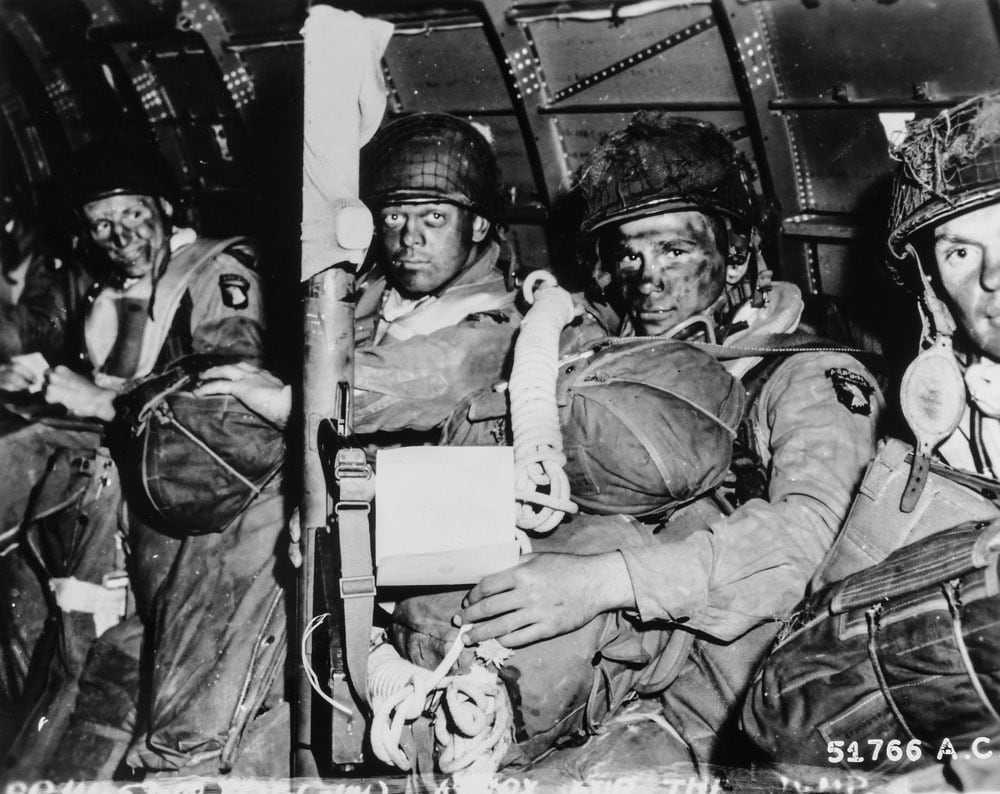
Since its inception, the 101st Airborne Division — made even more famous by Stephen Ambrose’s “Band of Brothers” — has fought in every major war, from jumping behind the lines on D-Day to fighting in decades of battle in Vietnam, Iraq and Afghanistan.
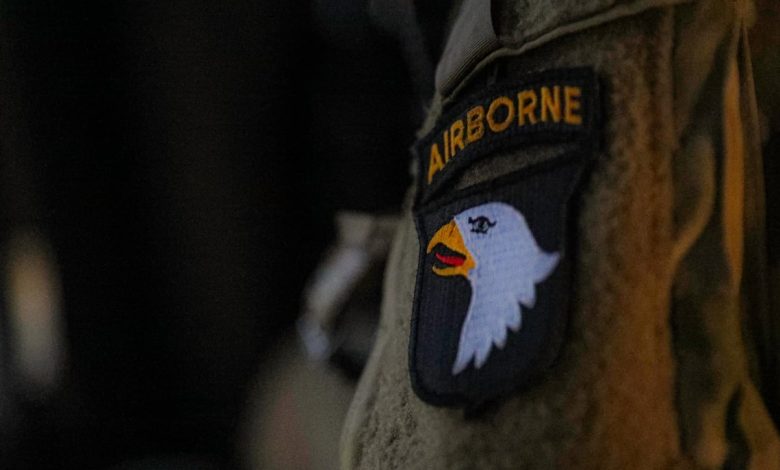
Its unit patch, the screaming eagle overlaid on a black shield, is perhaps the most recognizable insignia in the U.S. Army. Its history, however, is less so.
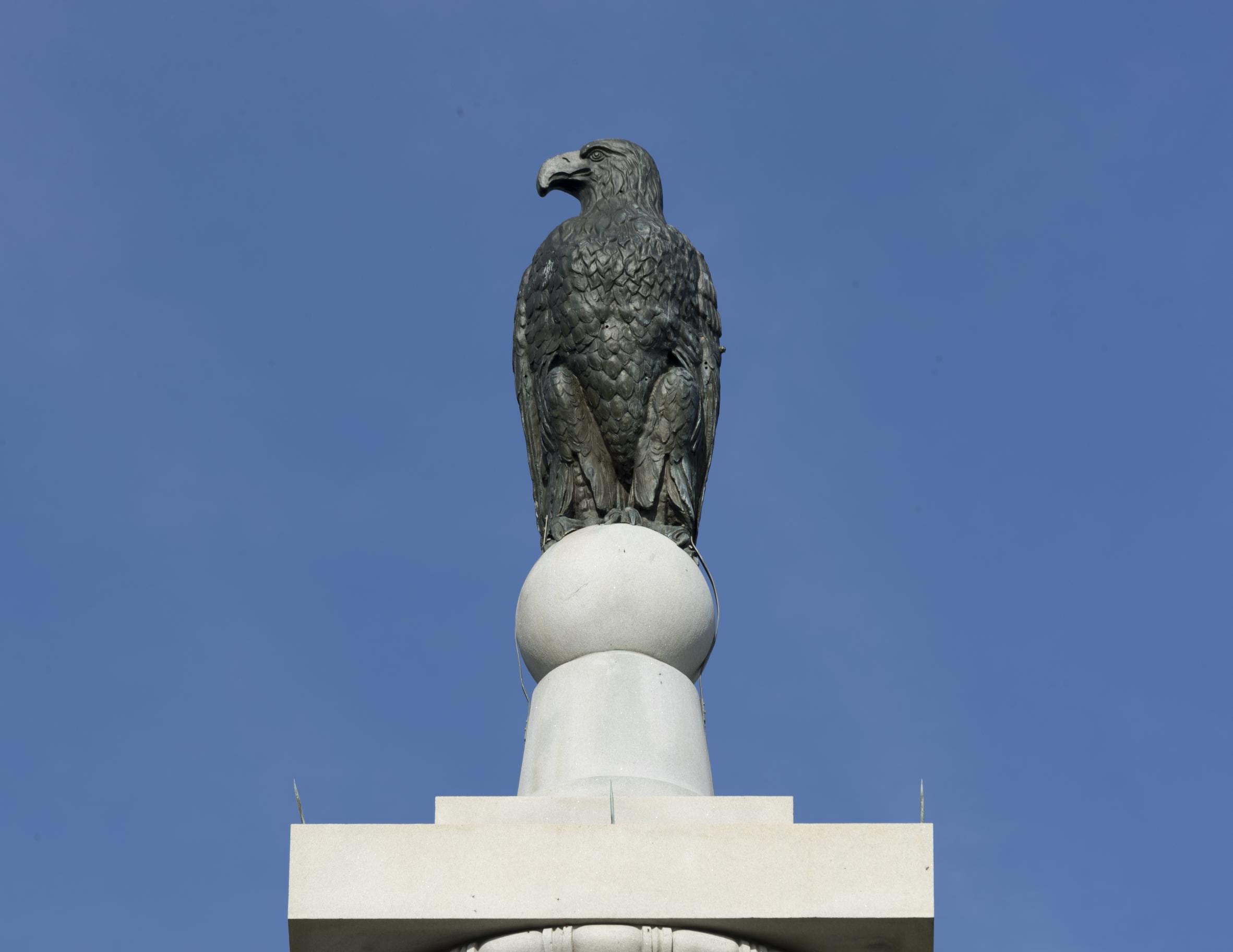
While the bald eagle is a national emblem, the 101st’s screaming eagle insignia pays homage to a genuine war bird from the Civil War.
Captured as an eaglet in 1861 by Ahgamahwegezhig (Chief Big Sky) of the Lac du Flambeau Band of the Lake Superior Ojibwe, the bird was soon sold to Daniel McCann of Chippewa County, Wisconsin, for a bushel of corn.
According to the Army, the bird was originally kept as a family pet, but due to the bird’s rapidly growing size and expense, McCann actively sought to sell the yet-to-be-named bird to passing units of Wisconsin troops enroute to their muster site at Camp Randall in Madison.
Eventually, he was sold off for $2.50 to Capt. John E. Perkins, commanding officer of a militia company called the “Eau Claire Badgers.”
Named “Old Abe” after President Abraham Lincoln, the bald eagle became a part of the 8th Wisconsin Infantry — and a legend in his own right.
After Perkins’ unit entered federal service, it was redesignated as Company C, 8th Wisconsin Volunteer Infantry Regiment, but with Old Abe on Perkins’ arm, the unit was quickly nicknamed the “Eagle Regiment.”
Carried into combat by a sergeant while perched on a black shield attached to a wooden pole, Old Abe rode into battle alongside the 8th Wisconsin’s national and regimental colors, witnessing 37 battles and skirmishes, including the violent clashes at Vicksburg and Corinth in Mississippi.
His original owner, Perkins, died on May 11, 1862, from wounds sustained during the Battle of Farmington on May 9. However, at the time of Perkins’ death, Old Abe had already been folded in as an official member of the Wisconsin unit.
In the lulls between battles, Old Abe helped to keep the men entertained by spreading his wings on command — and, to the delight of the soldiers, dancing. He was also a notorious pilferer of food.
An inspirational symbol for the 8th Wisconsin, Old Abe was — like the seizing of an enemy regimental flag — marked for capture.
According to the Wisconsin Historical Society, Col. Rufus Dawes recalled, “Our eagle usually accompanied us on the bloody field, and I heard [Confederate] prisoners say they would have given more to capture the eagle of the Eighth Wisconsin, than to take a whole brigade of men.”
The bounty for Old Abe grew, with Confederate Gen. Sterling Price thundering during the Battle of Corinth “that bird must be captured or killed at all hazards; I would rather get that eagle than capture a whole brigade or a dozen battle flags.”
Despite this, Old Abe remained firmly in the hands of his Wisconsin handlers, mustering out alongside the unit in 1864.
Donated to the state of Wisconsin by the men of the 8th, Old Abe lived out his days in the state capitol building or on display at roving political, social and cultural causes.
Unfortunately, according to the Wisconsin Historical Society, his living “conditions while in the government’s care declined over time and he suffered from exhaustion, exposure and malnutrition on a number of occasions.”
In 1881, a small fire broke out in the basement of the capitol building. Old Abe survived the flames, but sickened from smoke inhalation, the famous war eagle died within a month.
His legacy, however, as the face of both lethal airborne and air assault combat capabilities, lives on with the 101st. Adopted in 1921 as the unit’s patch insignia, Old Abe has become one of the most identifiable profiles both within the U.S. Army and beyond.
Claire Barrett is the Strategic Operations Editor for Sightline Media and a World War II researcher with an unparalleled affinity for Sir Winston Churchill and Michigan football.
Read the full article here