
The U.S. Air Force is once again conducting no-notice combat readiness inspections of units, and stresses to commanders that is one of their top priorities, a top service leader said Wednesday.
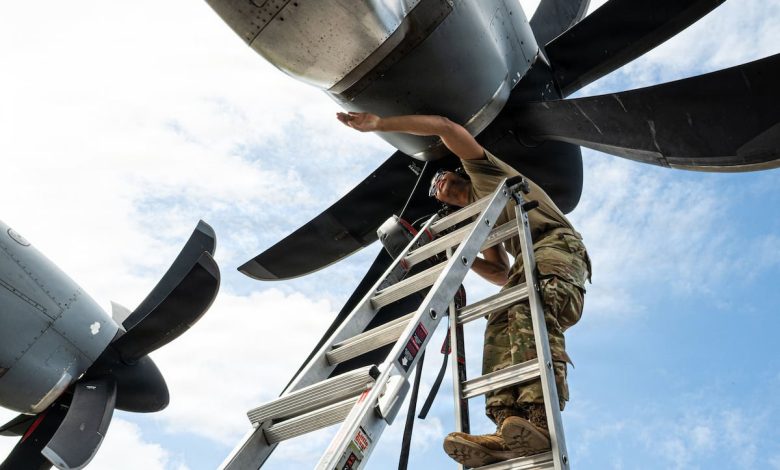
Lt. Gen. Scott Pleus, the Air Force’s acting vice chief of staff, told attendees at a Mitchell Institute for Aerospace Studies conference in Arlington, Virginia, that Air Force Secretary Troy Meink and Gen. Kenneth Wilsbach, the service’s chief of staff, have made improving readiness a top priority. That includes not just concentrating on flying airplanes, Pleus said, but fixing them so pilots and air crews can generate the sorties they need to project airpower.
In recent years, Pleus said, the Air Force has shifted to a more “centralized” approach to managing readiness. But now, he said, “we are putting commanders in commander business,” and not having staff or headquarters take the lead on readiness.
And if a surprise inspection shows a unit does not pass muster, Pleus said, it’s going to be on their commander.
“This is commanders’ business, and we’re going to hold commanders responsible for that,” Pleus said. “Because that is 100% in their wheelhouse. If they fail an inspection, that is the commander’s fault, and we will hold them accountable as we move forward.”
The Air Force has for years struggled with steadily declining aircraft readiness rates, but efforts to address the problem have yielded little success. Mission-capable rates across the fleet have continued to decline and hit 62% in fiscal 2024; the lowest in recent memory. Meanwhile, the service’s fleet is continually shrinking, and now has fewer than 5,000 aircraft.
Previous administrations emphasized modernizing the fleet, Pleus said, at the expense of readiness of the existing aircraft already on hand. Meink and Wilsbach are taking a different approach, he said, and “are explicitly clear readiness is our focus now.”
“We’ve got to buy parts,” Pleus said. “We’ve got to have the parts available so that … maintenance folks that are out there, wrenching on the flight line each and every day, in the cold, in the rain, in the heat, have the parts they need so they can fix those airplane, and then we can get them airborne again.”
Pleus said the Air Force is not abandoning its modernization drive, but will no longer do so at the cost of readiness. To do that, he said, the service is looking for better ways to use its funding and working with Congress and the Pentagon to ensure it has the maintenance skills and parts needed to ensure more planes are available to fly their missions.
The service is also emphasizing speed in its drive to improve readiness, Pleus said, including swiftly moving on exercises, acquisitions and working with the defense industrial base. Meink has stressed the need to eliminate needless bureaucracy in the acquisition process, for example, Pleus said.
“When you have all the time in the world, you can spend as much time as you want, taking the risk out of everything you do,” Pleus said. “When you don’t have any time, then you have to move at speed, and that is exactly what our secretary has asked us, and the chief has mandated that we are going to start to do.”
Pleus also said the service is emphasizing high standards. That includes everything from dress and appearance standards, which has been a priority of Defense Secretary Pete Hegseth, to the way airmen execute flying tactics and procedures.
“Everything in between is about setting a high standard, and then pushing your team to make sure that they are ready to do that high standard each and every day,” Pleus said.
Stephen Losey is the air warfare reporter for Defense News. He previously covered leadership and personnel issues at Air Force Times, and the Pentagon, special operations and air warfare at Military.com. He has traveled to the Middle East to cover U.S. Air Force operations.
Read the full article here