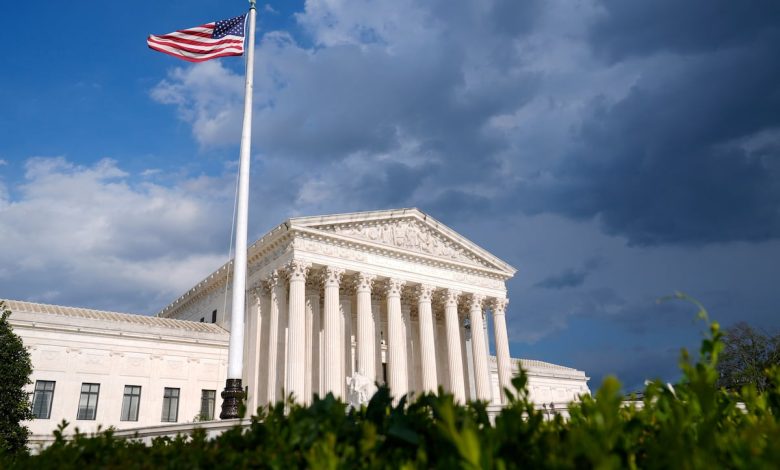

The U.S. Supreme Court heard arguments Monday in the case of an incarcerated veteran who, in challenging federal rules that reduce benefits for imprisoned vets, has questioned the judicial review of claims decisions.
Floyd Johnson, who served in the Army from 1983 to 1985, was sentenced in 2013 to 40 years in prison on felony charges in Florida. While incarcerated, Johnson was diagnosed with service-connected post-traumatic stress disorder and received an 80% disability rating from the Department of Veterans Affairs.
Because Johnson was in prison, however, his rating was reduced to 10% because veterans who are incarcerated for more than 60 days are restricted by law from receiving full benefits.
To fight the reduction, Johnson, who represented himself, filed a case in a Florida district court arguing that Congress violated his constitutional rights by instituting a law that placed caps on veterans’ benefits for those in prison.
The Middle District of Florida court dismissed the case in 2022. Johnson appealed to the 11th Circuit U.S. Court of Appeals, where he received legal representation and requested to name a new defendant — the VA or the VA secretary. He also strengthened his argument against the Veterans Judicial Review Act of 1988, which created a process for veterans to appeal disability claims decisions.
Under the law, a veteran whose claim is denied or disputed goes to the Board of Veterans Appeals, and if the result is not satisfactory to the veteran, it can be appealed to the Court of Appeals for Veterans Claims and the U.S. Court of Appeals for the Federal Circuit.
Johnson’s attorneys argued that the Veterans Judicial Review Act improperly limited the process to the BVA and CAVC, stripping a veteran of the right to file suit in a district court.
They argued that a previous case allowed veterans to pursue benefits cases elsewhere under circumstances that involve constitutionality. They also noted in their Supreme Court petition that other appellate courts have agreed that veterans may take their cases to district courts.
“A veteran’s access to the courts should not vary depending on where he lives. This case presents an ideal vehicle for resolving this conflict on an important question of federal law,” they wrote in the petition.
During oral arguments Monday, Justice Sonia Sotomayor called the system “odd,” but not for the reasons that Johnson’s attorney — Jeffrey Chen of the Atlanta-based firm Bondurant, Mixson and Elmore — cited.
Sotomayor pointed out that with a regulation in place saying the BVA can’t address constitutional questions, the veteran can still appeal any decision that comes out of it, but the government cannot, according to the law.
“We have to take the system as it exists, and that’s a very odd system, is it not?” Sotomayor said. “It leads to your conclusion … which is let constitutional questions go to the court because that’s where the government would have a right to defend the law.”
Justice Amy Coney Barrett pointed out that if the Board of Veterans Appeals violated a veteran’s constitutional rights, they could appeal to the U.S. Court of Veterans Appeals and eventually, the federal circuit where constitutional questions are decided.
“He has that route. He still has a way of pressing the constitutional claim,” Barrett said.
Chen argued that restricting claims reviews and suits to the BVA process would “empower the inferior officers of the BVA to render final decisions” and disregard laws.
“None of the government’s proposed workarounds is consistent with the Veterans Judicial Review Act,” Chen said.
Assistant to the Solicitor General Kevin Barber argued that the current system is sufficient and the previous case cited by the plaintiff preceded the VJRA and should not apply because the law changed the entire process.
“VJRA fundamentally changed the statutory scheme. … It’s the current statute that matters,” Barber said.
He added that the plaintiff’s additional argument, that the VA can’t decide constitutional challenges to statutes, “is mistaken.”
“True, the Board of Veterans Appeals in the past has been inconsistent on its authority, sometimes deciding such claims and sometimes not, but as we see it, the board can and must decide veterans’ constitutional claims,” Barber said. “Petitioner’s contrary view would conflict with the statutory text and deprive veterans of their ability to bring such claims to the agency. It would even compel the VA to enforce a hypothetical benefit statute that was blatantly unconstitutional.”
An estimated 107,400 veterans are incarcerated in state or federal prisons, according to the Department of Justice, although not all receive VA disability benefits. Johnson’s case does not challenge the law that limits the amount of VA benefits veterans receive while imprisoned. But in their petition, Johnson’s attorneys said he plans to pursue that effort after the current case is decided.
“This case illustrates the impact of a single veterans’ benefits statute. Section 5313, the statute Mr. Johnson challenges, limits the benefits of thousands of veterans. Moreover, 30 percent of all veterans experience service-connected disabilities, and veterans with PTSD are disproportionately at risk of incarceration,” the petition states.
The court is expected to rule early next year.
Patricia Kime is a senior writer covering military and veterans health care, medicine and personnel issues.
Read the full article here