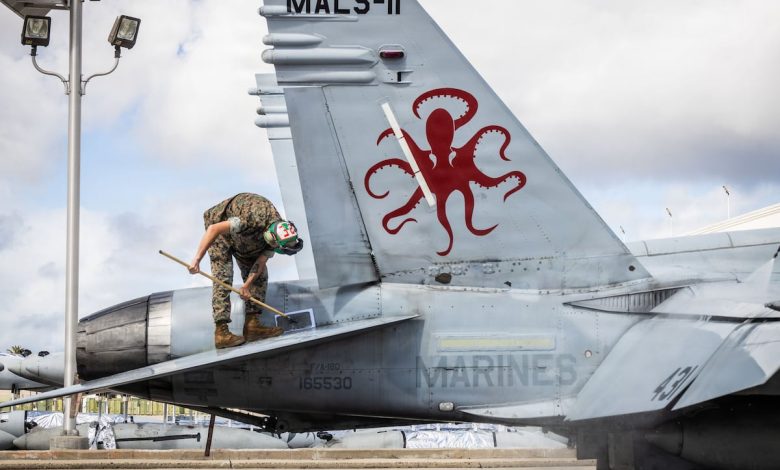

The U.S. Marine Corps plans to phase out enlisted jobs tied to the F/A-18 Hornet as it transitions to an all-F-35 tactical aircraft fleet.
According to Tuesday’s Marine Administrative Message, or MARADMIN, the Corps will deactivate all remaining Hornet squadrons by 2030 and eliminate the maintenance specialties associated with the aging fighter jet.
Marines currently serving in one of the six affected specialties — including mechanic, avionics and technician roles — will have the opportunity to retrain for F-35 jobs, move into another specialty or leave the service once their enlistment contracts end.
While the Corps said Marines are “highly encouraged” to laterally move from F/A-18 to F-35 specialties, those who do not transition voluntarily may be reassigned based “solely on the needs of the Marine Corps,” regardless of how much time remains on their contracts.
The transition will occur regionally, with Hornet operations ending at different installations over the next several years. Once those transitions are complete, the F/A-18 maintenance occupations will effectively cease to exist.
The Corps plans to end Hornet operations at the following locations:
- Marine Corps Air Station Beaufort, South Carolina, by Aug. 1, 2028
- Marine Corps Air Station Miramar, California, by Aug. 1, 2029
- Naval Air Station Joint Reserve Base Fort Worth, Texas, by Aug. 1, 2030
The Marines have already replaced Hornet squadrons with F-35 units at several bases in the United States and overseas. In 2018, the service deactivated its squadron for training F/A-18 pilots.
The Marine Corps adopted the F/A-18 Hornet in 1983 and has since flown it extensively in conflicts including Libya, Iraq, Bosnia and Afghanistan, according to a Naval Air Systems Command fact sheet.
NAVAIR described the aircraft as “the workhorse of Marine Corps tactical aviation,” noting that the Hornet proved capable of shooting down enemy fighters and striking ground targets during the same mission.
The command also highlighted the aircraft’s survivability, citing incidents in which Hornets damaged by surface-to-air missiles were repaired and returned to flight operations within days.
Although experts still consider the Hornet a capable platform, the F-35 was designed for modern warfare with advanced stealth and electronic warfare capabilities. According to the 2026 Marine Aviation Plan, the Marines plan to expand its F-35 fleet to 420 aircraft.
Read the full article here